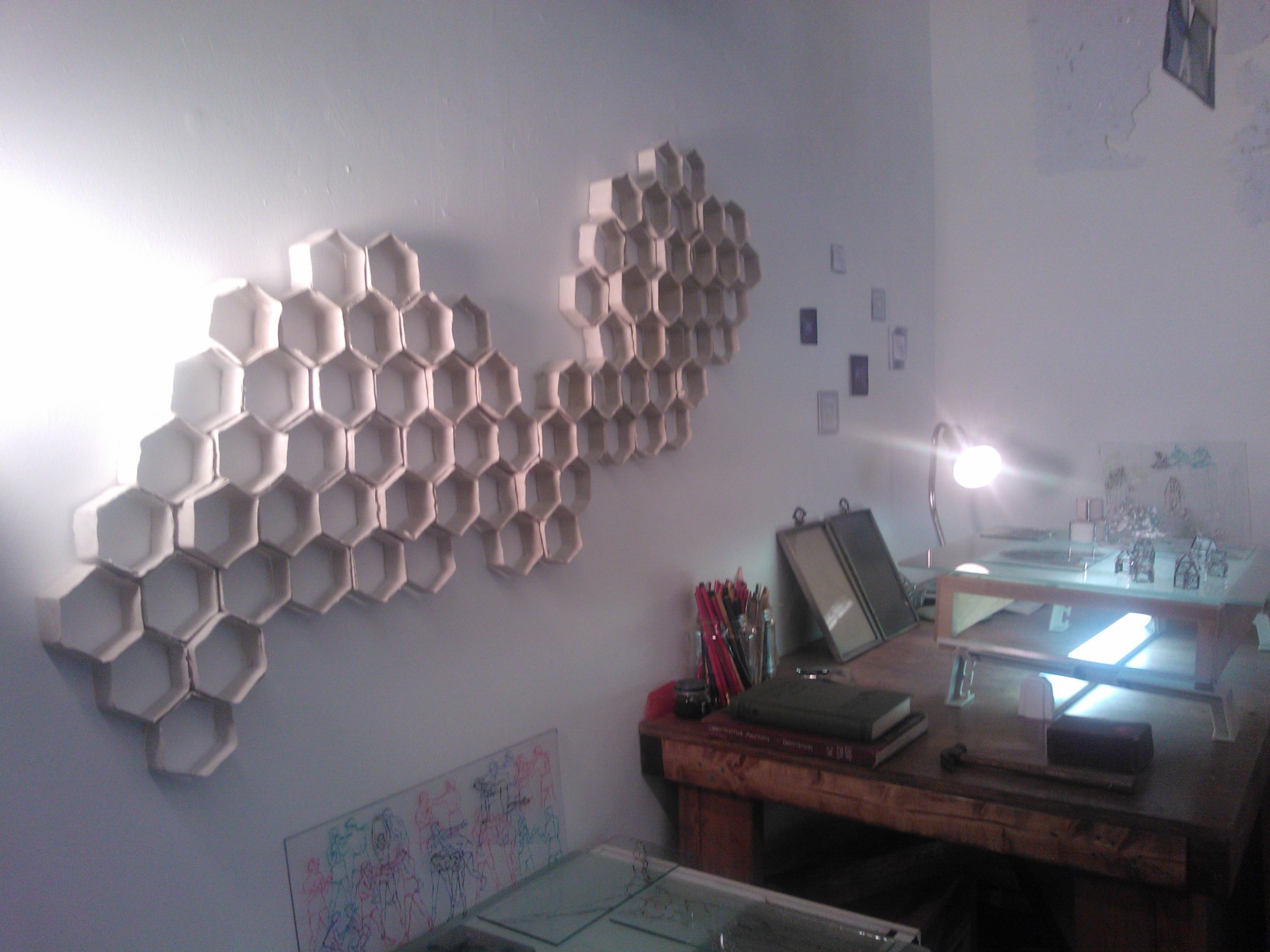
What’s in the mix for making things flow between people?  Enthusiasm, Curiosity and Desire!  Active, receptive and responsive in kind, these three interpersonal strategies reinforce one another and build lateral engagement in communities.

WP_000730

Enthusiasm means putting it out there.  Let people see your passions and be happy to see theirs.

Curiosity is the moment when you or I decide to cross the threshold that separates us with a blank and an invitation.  Only an open mind can be receptive to new ideas and grow.

Desire is the spark that encourages people to connect.  It means expressing the notion that there are many good things in the space between us just waiting to be discovered.

When in doubt…

  • TRY enthusiasm.  “I like….”
  • TRY curiosity, “I wonder…”
  • TRY desire. “I wish…”

For best results, try all three!

***

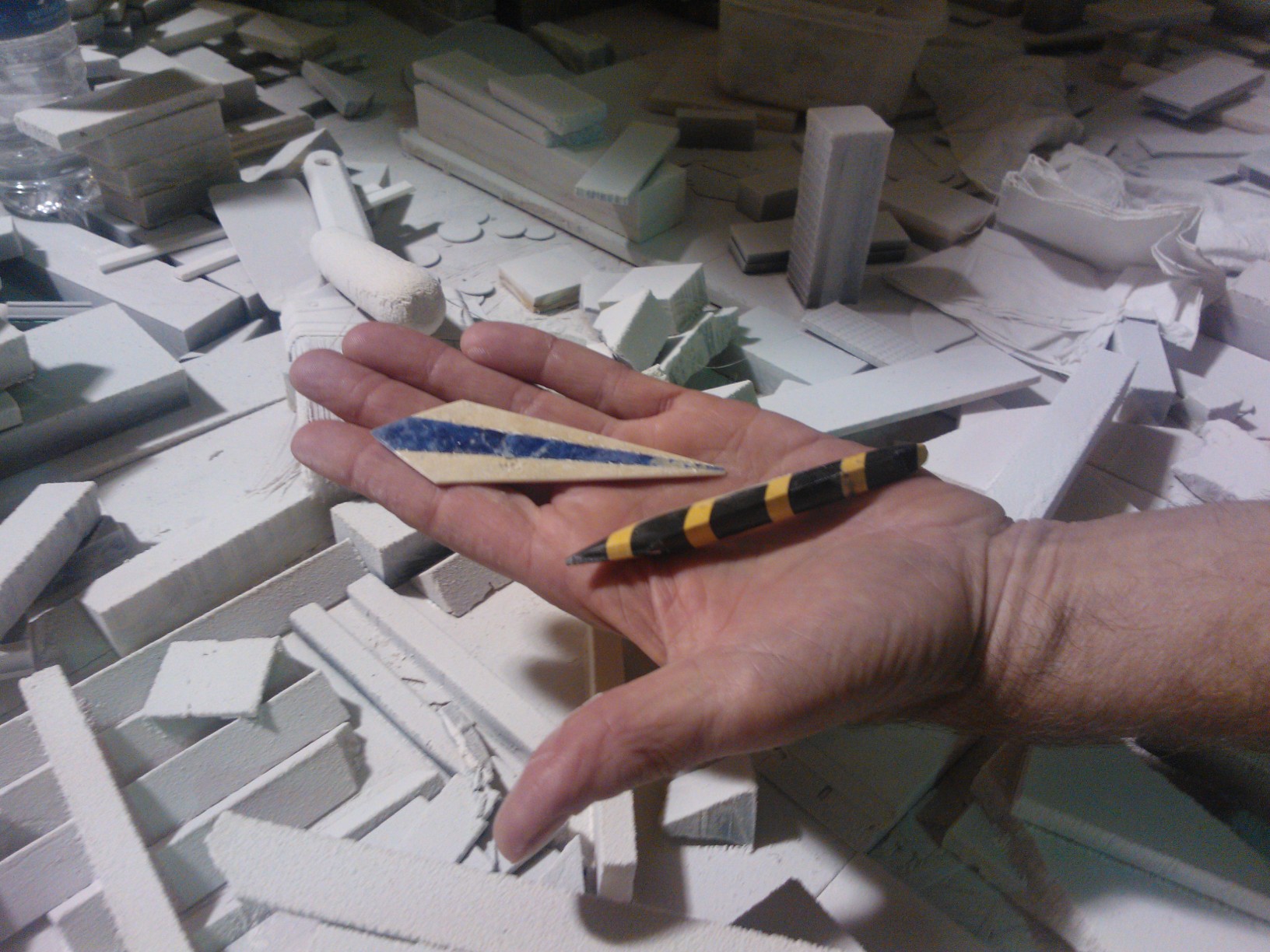
I developed this three-part recipe for Wetting the Cement after some intentional experiments with the ingredients during Summer 2013.   Two sets of results were validating.

1. Getting  invited to become more and more involved with the Stoos movement and organizing Stoos in Action  stoosinaction.dk  The core Agile team of organizers was based in Denmark. Fifteen satellites across four continents responded to our invitation to participate.  The “action” was a 6-hour virtual conference dedicated to improving the world of work.

2.  Submitting the idea for a Guinness-approved world record attempt for Largest Chalk Pavement Art to the Awesome Foundation.  Positive community response mobilized over 1,000 individuals, 18 community groups, eight city agencies and a unanimously supportive City Council.  The current world record holder embraced us, not as challengers but as successors.  The Agile community is now interested in the use of scrum to make public art.

In both cases, the individuals could not have predicted what finally occurred.  Enthusiasm, curiosity and desire magnified in an organic way to global scale.

Find out what happens with YOUR special blend in the mix.   Share enthusiasm, curiosity and desire to connect.  I am always happy to hear from you!

ACKNOWLEDGEMENTS:

Deborah Hartmann Preuss A Bigger Game http://abiggerga.me/blog/author/admin/

Akshay Kathari “I Like, I Wish, I Wonder, a framework for providing constructive feedback” https://medium.com/design-startups/ab25a6d5090f

Andrew Bangser, Awesome Foundation, Connecticut Chapter: “What Would You Do With $1000?”  https://www.facebook.com/photo.php?v=734224573257898

Mark Wagner, Drawing on Earth http://www.drawingonearth.org/

CityWide Open Studios (pictured) http://www.cwos.org/

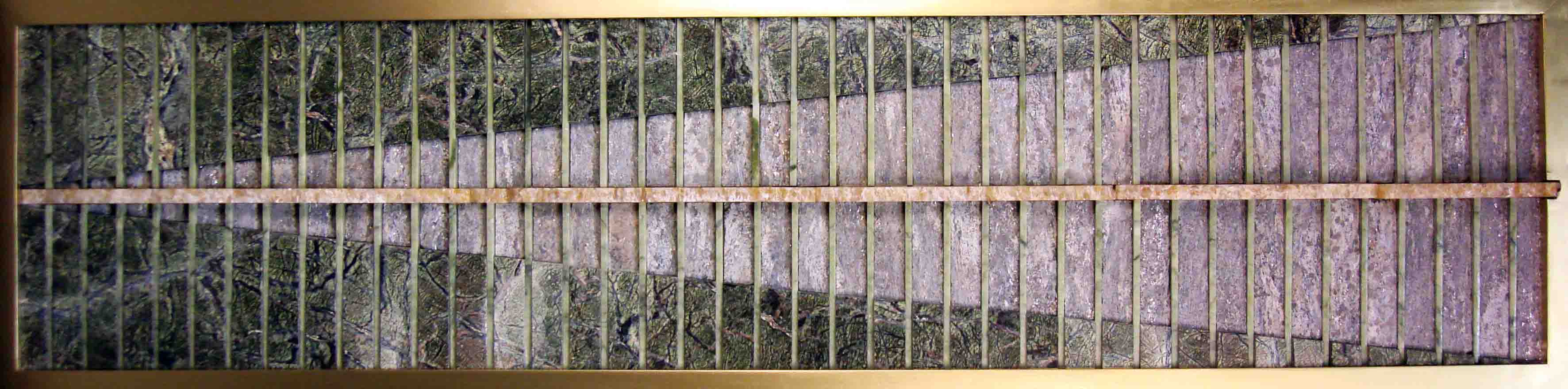
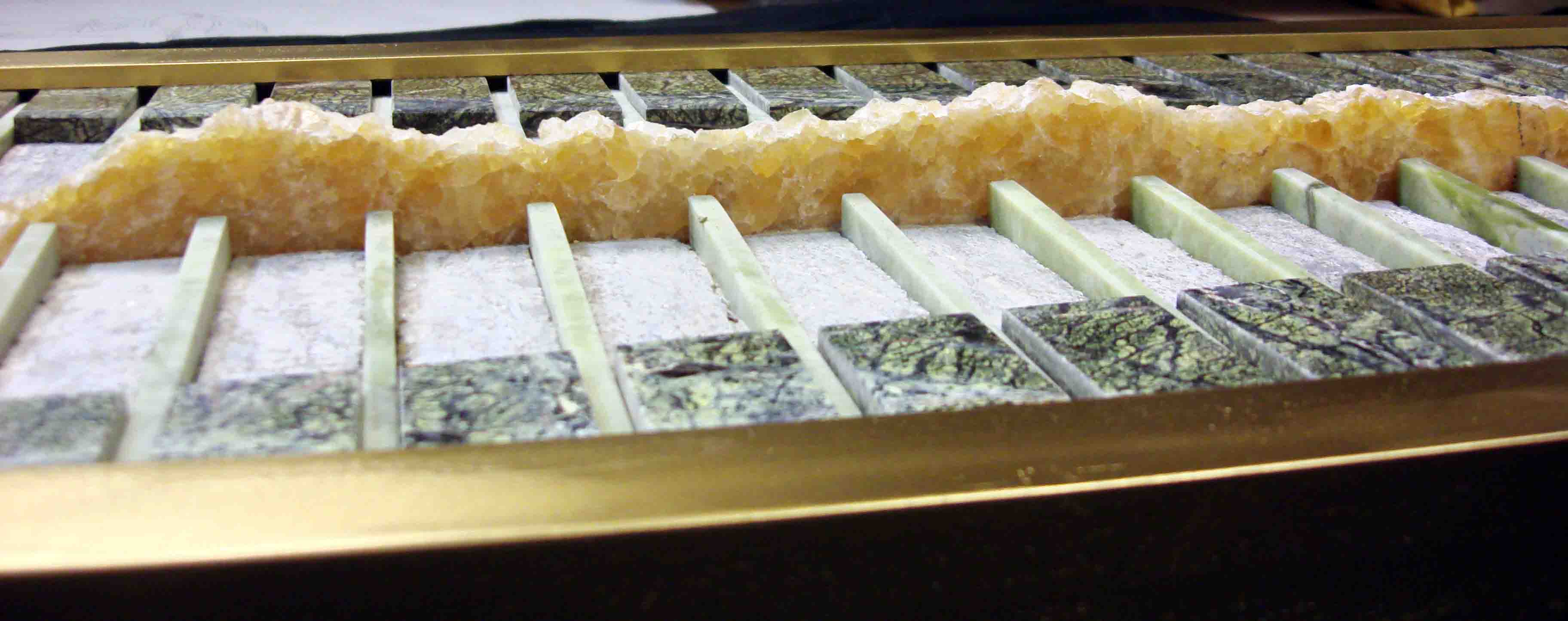
As an artist who “paints in stone,”  Mark Krueger seeks to approach the cohesiveness found in nature, revealing clarity of geometric relationships among interconnected parts.  His chief concern is finding innovative ways to play with those relationships.  Krueger invites his collaborators  – area designers – to use onyx, marble, sandstone, and quartzite in dynamic ways to create order, surprise and delight in interior spaces.

Mark Krueger 17

“Stone has important things to tell us that have not yet been said.  It’s a much more versatile and expressive medium than people think.  I pay close attention to the technical properties as well as the aesthetic possibilities latent in the different kinds of stone, so I can help people unlock them and prepare to live with them.”

He boldly challenges the dichotomous categories of form versus function that keep many artists’ careers from progressing except on a one-sided track.  “Why can’t an artist’s work serve a dual function?  Why can’t it be both art and an armoire, art and an insert in a backsplash?” To suspend judgements about artistic purity can be liberating, in Krueger’s opinion.  “I feel happy knowing someone sees my artwork every day, that it is woven into their daily routines.  Art shouldn’t just be reserved for special occasions.”

bird

Mark Krueger’s studio is in Wallingford, Connecticut, and New Haven County is his home base.  The market for his high-end customized stone installations extends to Long Island, Manhattan, Westchester, and Fairfield County, Connecticut, where people often take great pride in their aesthetic displays.  Important sources for his materials are Onyx Stone in Woodbridge, Ele Mar Stone Distributors in New Haven and New York Stone in West Haven, CT.  He has also created an alter ego, Armando Bertoli, who represents his work in Europe: armandobertoli.com

In a world of pre-fabricated options, where creating an interior is often simply an exercise in multiple choice, Krueger says: “Make yourself available to the end users.  Lift the limitations.  Show them something more is possible.”  He wants to give people the confidence to be creative, and the assurance that each of his stone installations is the first and only one of its kind.

AB

Designers help provide continual feedback from customers and become true creative partners.  It is through the daunting work of listening between the lines for what people really want, what might surpass their expectations, prototyping, discussing and elaborating that Krueger stays inspired to inject artfulness into what has essentially remained a rather stagnantly commercial process over the decades.

Krueger’s installations are like murals, belying his roots as a painter.  The work is realized in two-and-a-half dimensions, highly customized and site-specific.  Subtle gradations in finish, from quite rough to a smooth polish, treat the light differently.  “Some day I’ll teach people how to do it. I’d love for other people to do it, but do it by hand.”

AB2

Another innovative tactic he uses to push stone beyond sculpture and mosaic is to bond thin slices of it to glass with clear epoxy resin.  The results can be used in place of what might commonly be a freestanding glass enclosure, such as a shower door, and backlit to produce dramatic ambient effects.

“Those who choose to collaborate with me have access to a whole new palette.”  Onyx is especially suited, Krueger finds, to use as part of unique light fixtures.  Bonding a thin layer of onyx to another stone produces light variation in the underlying stone’s color.  “Shading in this way, if we need another shade of green than one we find normally occurs, we simply make it.  We can literally create new colors of stone.”

Yet, a world of infinite choice is not actually the end goal in our age of extreme complexity and uncertainty.  Krueger provokes collaborators to wonder together, “how do we thoughtfully eliminate information to make life more manageable?”  Arriving at the proper level of abstraction by bringing the information embedded in a project through several stages of reduction is, in his opinion, one of the most important design questions to resolve.  The solution is different each time, speaking to the needs, constraints and reference points that inspire each set of circumstances in which he works.

AB3

Krueger hopes in the future to take collaboration to a new level with other artists.  He notes, “on a nice, big residential project, we can create internal surfaces that have future flexibility.  One of the big unexplored spaces in homes is the ceiling.  In Europe, ceilings are really designed and thought through.  Stateside, you still see mostly white space.”

In place of this blank canvas, Krueger wants to create a system of panels which could be periodically replaced as an interchangeable design element.  An end user could have seasonal sets of ceiling panels, for instance, with different color schemes, or wish to highlight a particular thematic or design element from a particular part of the world.  “The idea is, you don’t have to live with it forever, but you don’t have to start from scratch when you want a change.”

“I want collaborating with me to be a fun form of creative expression, not overwhelming.”  To that end, Krueger invites members of the design community to have him speak about the medium of stone and its untapped capacities.  Images of work in various stages plus actual stone samples make for sensory rich, interactive experiences.  Email mark.krueger1@yahoo.com for scheduling.  You may also see him present live at Pechakucha New Haven on Wednesday, November 13 at Bentara Restaurant. http://pkn-newhaven.org/NextEvent

In the book Sleights of Mind, Macknik & Martinez-Conde make the point that professional illusionists are artists.  Their medium is not a deck of cards but rather skillful manipulation of human attention and cognition.

joker

The authors present a few lessons learned that can be useful outside of a magic show.  Distortions in how we process information tend to fall into certain predictable patterns.

  •  Illusionists often “divide and conquer” your supply of attention.   Relaxed, serial concentration is best for gaining situational awareness and making discerning observations.
  •  “Apparent exposure” is a kind of false transparency or plausible-sounding candor, such as revealing one trick (or mistake) so that another might go unnoticed.
  • “Good continuation” means resolving pieces that are missing according to what has been seen in the past.  The brain is always filling in blanks.   SPOILER ALERT: The old bent spoon trick relies on this feature of our innate computing equipment.
  • We spend more neural energy on differences than on similarities, so contrast is the fastest trigger for capturing attention.  (Think of how much more often in Lean circles we discuss pivoting versus needing to persevere!)
  • Tension often creates a false impression that purposeful action is taking place.
  • Framing is the ability to define the container for attention.    Often what’s actually pulling the story forward is happening outside the frame.

We all have many conflicting demands on our full attention.   Becoming more aware of the cognitive distortions this creates can help us understand and perhaps better account for human fallibility and the limits of perception.

LESSONS ARE FROM: Sleights of Mind: What the Neuroscience of Deception Reveals about our Everyday Perceptions, by Stephen Macknik & Susana Martinez-Conde http://www.amazon.com/Sleights-Mind-Neuroscience-Everyday-Deceptions/dp/0312611676/ref=sr_1_1?ie=UTF8&qid=1382352340&sr=8-1&keywords=sleights+of+mind

Special thanks to my friend Eric Mesh,  a Connecticut-based science writer and educator, for recommending this book!

This was a Talkback I prepared for Lisette Sutherland, who could not attend Agile Bill Kreb’s 3D Webinar aired September 18, 2013.  Video at: http://www.agiledimensions.com/blog/video.  Get in touch with me if you’d like a TalkBack prepared for your online event! – ES

wave surger

Speaker Tom Wessel – Davisbase Consulting http://www.davisbase.com/

Interactive Features: Spatial Environment.  Moderator gave lots of voice inflection, made listening engaging. Brought in other senses: made the sound of hands rubbing together, at the questions coming in.  This was a nice moment!

Tom Wessell is founder of Southern Fried Agile Conference…http://southernfriedagile.com/ Regional flavors of Agile can complement and strengthen each other.   Enjoy the chicken, celebrate our thought leaders.  Attendance has gone from 75 to north of 300.  Five different tracks total 20 sessions.  5 PDUs  are like PMP crack!  We do it on a Friday – this year it’s October 18, 2013.  Take the day off and hang out with geeks and freaks and have a good time.

Virtual world graphics used to express metaphors for Agile:

Surfing

It’s a pure sport – a simplistic framework in which you have just a few elements to work with and you must navigate a very complex system.  Execute on the wave, you have to adapt to the motions of that wave.  That’s Agile, applying simple tools to an ever-changing environment.  Otherwise, you end up in the drink!

Pile of Stones

The stones relate to release planning.  There’s a sequential flow of fulfilling requirements that have to be met by a specific date.  Iterations are fixed bucket sizes, requirements are different sized stones.  We arrange them into buckets based on needs of organizations.  Sustainable pace – small pebbles fill in the empty space around big rocks to even the flow.  Takes negotiation between teams and product owner.  There is a logical order to what takes place.

Fossil of Dinosaur Bones

Agile is more than software development and teams.  We as an organization need to evolve and adapt.  Challenges rise as you move up the food chain, it takes more energy to break down the silos and move toward an agile enterprise.  If you do not evolve to be competitive, you will end up extinct.  We are knowledge workers so learning is the bulk of what we do.  If you’re not upgrading skills every two years or so you’re probably falling behind.

Seed

Seeds sprouting in different stages relate to a paradigm shift we are experiencing from command and control structures to allowing for emergent design based on intrinsic strengths.  Project managers have many chances to grow in their development and understanding.  Agile is not a fad.  This is something that has value.  It is growing strong.

Watchmaking versus the Weather

Complicated system versus a complex system.  In the systems we work in, there is too much variability to mindlessly follow a fixed set of plans.  We must inspect and adapt and use whatever we’re learning.  Incorporate a replanning perspective.

Trends are Emerging Patterns.  Here are some:

Pairing a PM with an SM – team focused paired with externally focused.  Scrum Master job is full time, external requirements like compliance takes research and time that a partner can support, esp in a regulated environment.  PM will help navigate that.  Plus this helps agile transitions at enterprise scale by giving a legitimate role for the PM.  SM takes certain skills, empathetic/nanny/psychologist/motivator…not all PMs can make that transition.

SAFe structure -you’re addressing the things that we want to spend money on that fit into a business strategy – end to end system, whole organism – structure will help us evolve

Soft is the new hard.  People skills matter incredibly much.  We are imperfect creatures and hard to work with.  Servant leaders ask: how do I take this group of talented individuals and get them moving in a common direction and becoming high performing?  Then how do we take that to the next level, to the whole organization?

Focus on communication/negotiation/mutual respect – different parts of the organism flexibly say “sure – we’ll reconsider what we were going to do in light of what we are learning about how to make happy customers”  This can be internal or external…making the product owners happy is great.  Barbara Fredrickson’s books tell us that three to one positive to stressful events keep your brain operating at peak efficiency.  http://www.amazon.com/Love-2-0-Supreme-Emotion-Everything/dp/1594630992/ref=sr_1_1?ie=UTF8&qid=1379555688&sr=8-1&keywords=Barbara+Fredrickson

Chief product owner with sub product owners   Complex systems have multiple subsystems.  The voice of the customer includes competing needs and priorities.

Managing your personal WIP so you’re more productive and less stressed.  Our work in progress as thought workers isn’t visible, then at the end of the day we wonder why we’re so tired…what are all the things that are work in progress – make them visible so you can visualize them and understand why you’re so tired. Limit our WIP because we think we want as much work going on at once as possible, but we as humans are not as good at multitasking as we think. Chunking and conquering can be applied to anything in life, that’s what’s great about Agile principles, not just software

Goldilocks Approach to Process: focus on “what is the right level of process to support the flow through the system?”  Not too much, not too little, has to be just right to avoid disconnect without overcommunicating.  This is sophisticated stuff – Agile is evolving, and so are organizations.

Stuart Scott has an interesting title: Chief Conversation Starter.  We’ve been meeting for virtual coffee and conversation on topics related to organizational change. – ES

WP_000645

SS: Any human system exists because individuals are interacting.  A company, an organization, lives and breathes inside those interactions.  So, if I’m in the process improvement business, I’m actually intent on improving the quality of human interactions.

When there’s a process problem, it’s a good bet that either a conversation isn’t happening or isn’t focused on the right issues or isn’t including all the right people.  For example, people in one department will often get together to discuss how they wish people in another department would interact with them. But they don’t actually reach out to the people in the other department to include them in the conversation about how the two groups will interact.

How do we break this?  I like to help groups focus on improving their interactions with other groups, and one tool I like is the “business interaction model.”  It helps people identify the other groups they regularly interact with, and examine the quality of each of those relationships.

ES:  Yes, because most human interactions seem to live in the interstices, the places where various groups come together in an organization, not inside the bounded categories.  I’ve applied the old SWOT exercise of mapping out Strengths, Weaknesses, Opportunities and Threats to these in-between spaces.  Inviting subcultures or groups within the organization to consider how to improve their interactions through this kind of Interstitial Planning (as I’m calling it) seems critical to organizational pathfinding and sensemaking.

SS:  I see enormous value in that.  First you draw a line on the diagram to represent the connection or interaction between two groups.  And then have a conversation about what’s working and what’s not working inside that interaction.  This calls to mind a model of human relationships that helped me understand what I’m responsible for in a relationship with another person.

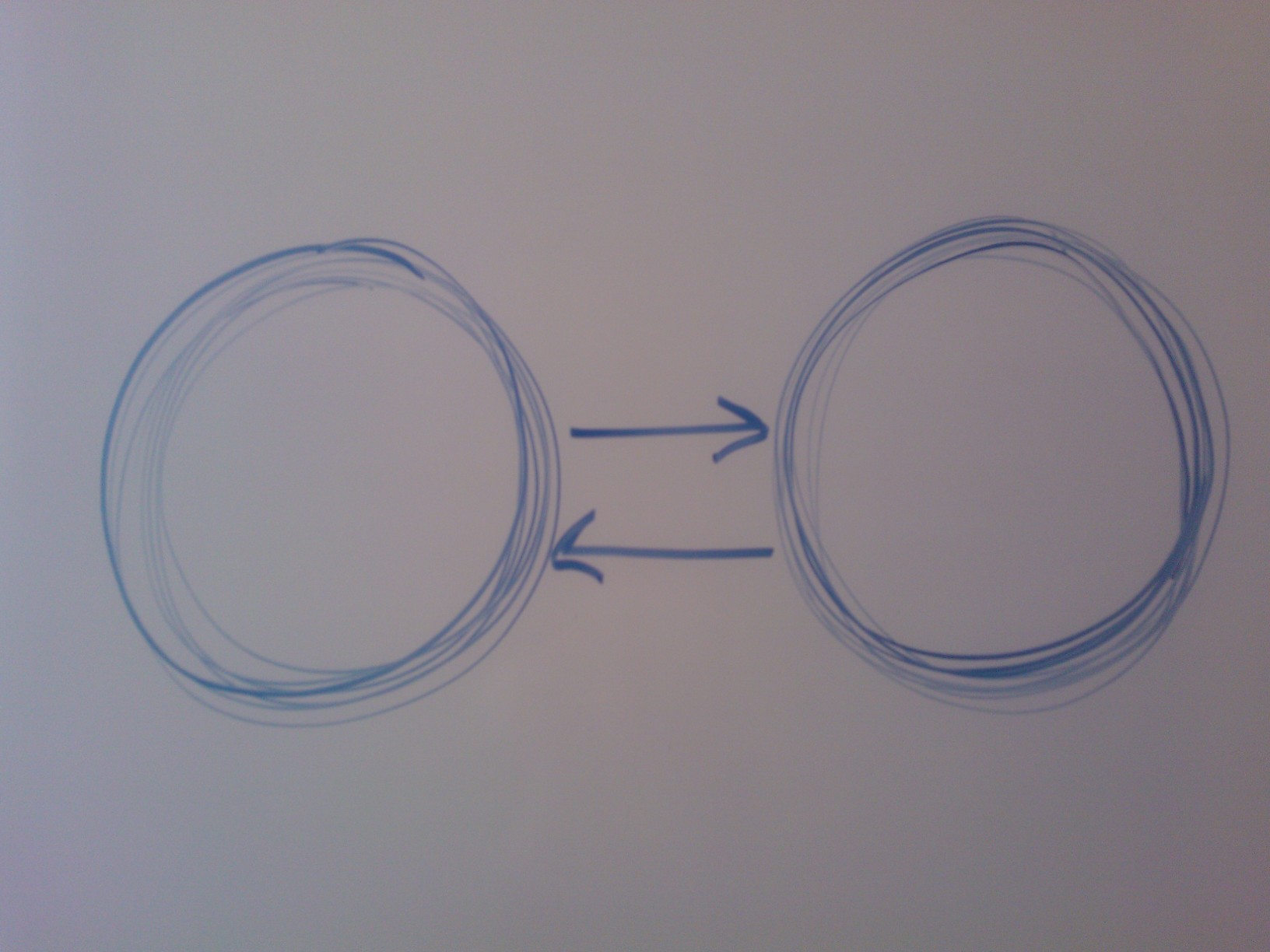
Imagine a piece of paper with two circles for the individuals and a line connecting them.  How do we share responsibility for the relationship represented by that line? How much of that relationship am I responsible for, and how much are you responsible for? Most people I’ve asked have suggested that each party is responsible for 50% of the relationship. The person represented by the circle on the left is thus responsible for the left half of the line up to its midpoint, while the person represented by the circle on the right is responsible for the right half of the line. The goal, it seems, is to meet halfway.

WP_000641 (1)

In practice though, this approach doesn’t work very well. On any given day, I might feel you aren’t owning your full 50% of the relationship. So I might get annoyed with you because you’re forcing me to do more than my share. The only way the relationship can work is if we always believe the other person is doing his or her 50%.

Clearly there are pitfalls.  How about this instead?  Instead of saying that “we have a relationship” represented in our diagram by a single line, we can say that I have a relationship with you represented by a line from me to you, and you have a relationship with me, represented by another line from you to me.

WP_000639 (1)

In this model, I take on 100% responsibility for my thinking and behaviors in my relationship with you. That’s my line across the white space.  My own creation.  That means I can have a productive relationship with you without depending upon you for a certain percentage. Similarly, you are 100% responsible for how you choose to relate to me, regardless of my treatment of you.

Now imagine if you brought that conversation into an interdepartmental squabble.  It might help those human relationships, which are so often filled with confusion and disappointment.

ES:  You might bring the conversation directly into the conflicted space, or you might set it up outside the structure.  In the spaces between departments, systems, and cultures, people can dip into a new way of relating, fill up and then return to their respective positions with greater clarity and perspective.  Like a support group for people trying to find positive ways to handle interactions at work.

You almost need to be in a different space physically, where you can feel a new energy.  That allows you to create what [our mutual friend and colleague] Devin [Hedge] describes as new neural and muscular patterns, in order to go beyond the situations in which the problems originally got created.

SS:  Yes, it can help a lot to set up a different kind of “space” for the conversation if you want the nature of the conversation to change.  That reminds me of how a group of my process improvement colleagues and I set up a weekly conference call so we could stay in a conversation about our efforts to get the right people involved in the right conversations.  Our focus was on how we could contribute in any positive way.  That was five years ago, and we still meet and talk even though we now work for different companies.  People seem to find a lot of valuable in creating this kind of space for sharing interpersonal experiences and challenges within a business. We remember the power of being honest with peers on a regular basis.  Indeed, it’s quite powerful.

ES:  You mention positive contributions. With all the focus on organizational cultures, I’m often wondering how we could create structures that identify and support individuals who are good culture-builders.  I’m working on one now, Scrum of One, which I’ll be bringing to Agile India.  It’s a set of practices inspired by my work over the years with artists and arts organizations.  These practices don’t depend upon a whole enterprise being oriented in any particular way. It’s both ongoing preparation for the creative individuals who get it as well as a way for enlightened organizations to find them so they can work with them.

What if positive culture-builders became fearless at work?  How would business look if we could trust that if a system penalizes them for being authentic, another will be waiting that values them more and is a better match?

SS:  You’re talking about raising the levels of personal responsibility.  In other words, it’s about deciding what I bring to my relationship with you, regardless of how you are behaving toward me. It’s about reaching across the “white space” between the two circles in our diagram above, instead of just trying to meet you halfway.  The motivation for that is not, of course, inside the system.

In organizations, the truly intractable problems span multiple functional areas.  They have no single owner, no single cause, they aren’t linear.  To address these complex problems effectively, we need to create new spaces for conversation so that we invite people to step in and contribute their unique needs and perspectives. I sometimes call this “creating space for the conversations that aren’t happening yet.”

ES:  I can’t wait to see the energy and cohesion that will come when that occurs.

Staff and youth from The Future Project http://www.thefutureproject.org/ joined E. Slomba Arts Interstices for the program “Opening Your Curatorial Eye”  (see Juicy Programs tab!) at City Wide Open Studios, an annual event produced by Art Space Gallery http://cwos.org/.  The Future Project helps local teens discover their passions and turn them into projects.  Dedicated staff members are called Dream Directors.

WP_000604

A former Erector Set factory known as Erector Square http://en.wikipedia.org/wiki/Erector_Square houses the personal studios of hundreds of local artists in New Haven, Connecticut.  This high-density of creators made it an especially exciting place to be during City Wide Open Studios.

WP_000613

Participating teens visited the studios, met with artists and selected works for an upcoming exhibit, Navigate Complexity, to open at The Grove on November 18, 2013.

WP_000620

Artwork pictured above (middle photo) by Jaime Kriksciun.  Studio pictured above (lower photo) is Daniel Eugene’s.

Please find the complete, corresponding audio interview between Daniel Stoelb and Dawna Jones at the end of my guest post here: http://www.frominsighttoaction.com/blog/#!


Image

According to Daniel Stoelb (Leadership and the Lean Five Percent), most change initiatives inside organizations do not place enough emphasis on building trust and establishing integrity.  There is no way, in his opinion, to succeed at a business transformation without first and foremost involving the people you’re leading in the change effort.  Their willingness to respond to the invitation becomes the starting point for everything else.

Listening to a preview of his audio interview with Dawna Jones, I was struck by how long people have been thinking about these things and watching for signs that the realized efforts are starting to crown.  It must be no coincidence that labor means work as well as birth!

 Stoelb’s own epiphany came twenty years ago, when his mantra became “focus on the people side of change.”  He had a chance to enter into a high-conflict, unionized environment and in just one year help settle over 400 longstanding grievances and establish cross-functional teams.  It took three years, he says, to fully open up the space for a positive work culture. The client stuck with the process and achieved validating results.

“The more control you give up, the more control you have.”  That is Steolb’s powerful assertion and, he believes, the paradox of leadership.  He compares it to the process of surrender that a smoker goes through before replacing the bad habit with a positive one.  “The activity of trying to transform creates a sort of structural tension.  A support mechanism becomes necessary. With this support, resolving the tension brings you to a new and better place.”

A combination of co-created vision and process create the adequate container for guiding people in an organization along a successful path.  “Resistance is an overused phrase.  People aren’t resistant to change.  They are resistant to change in which they have no say or input.”

 Crafting a written statement beyond the organizational mission is a critical first step.  “Tell people what is going to occur, what’s in it for them, and when it’s going to occur.”  

Next, gathering input is key.  “Many organizations claim their people are the greatest resource, but don’t act like it.”

 A big part of the problem is the way managers are trained.  “It can be easier to get support for change on the shop floor than from the middle managers.”  Management have been overly focused on skills rather than “the being” of leadership.  

A compelling moment in the interview was when Dawna Jones asked him to elaborate on the idea of tension as an energy that can be harnessed and used for good in an organization.  According to Stoelb, “when the tension diffuses, it creates misalignment.”  According to Jones, when this happens, “blood gets left on the floor.”  She offered the image of change as a spiral: organizations can either spiral up towards expansion and creative solutions, or spiral down towards mess and confusion.  

Stoelb focuses his trainings, communications and presentations on redirecting the energy of conflict so it can be used in a constructive way.  He claims, “most of us, when we look at our personal lives, would admit we are poor at resolving conflict.  It’s no wonder, then, that we avoid conflict at work.”

However, the attempt to avoid conflict is misguided.  “There is no avoiding conflict.  The only way out of conflict is to work through it.”  In Stoelb’s view, that is how we mature, as people, as organizations and as a society. Successfully working through conflict creates sustained change.

Image

“Creating an environment that is empowered and open, where we support people in being part of the change, that doesn’t just apply to business.”  Jones and Stoelb concluded their interview by discussing the social impact of these ideas and the ways in which Lean concepts are being applied in government, the military and all manner of civic and social arenas.  “There’s been a huge shift towards recognizing the value of local relationships, and being more conscious about how how we utilize resources.  The new models for success involve people at the local level in decision making.”


BIOS

Daniel Stoelb is a Lean Sensei and Organizational Transformation Leader living in Kirkland, WA (near Seattle).  He is presently writing two books:  “The Being of Leadership” which goes into further discussion about a values-based, servant-leader mindset, and “The 27 Irrefutable Laws of Organizational Demise,” based on what organizations fail to do when implementing change.  His presentation “So You Wanna Be Change Agent: Lessons from the Trenches – What it Takes to Lead Change in Any Organization” can be found here: http://www.slideshare.net/dstoelb/change-and-why-it-fails

Dawna Jones delivers customized experiential workshops engaging managers, employees and executives in removing hidden barriers to collaboration.  She specializes in leveraging the invisible toward improving speed and accuracy of decisions. Contact her through www.FromInsightToAction.com 


You can also see this piece on the Self Management Institute blogroll at http://self-managementinstitute.org/

Over Labor Day weekend an extraordinary event took place in the world of self organized groups.  Philadelphia, the City of Brotherly Love, hosted the World Convention of one of the largest and most respected 12-Step recovery programs, known as Narcotics Anonymous.  Over 18,000 recovering addicts were in attendance, from over 100 countries.

journey

Twelve-step programs are a massive worldwide movement of various, self-organized groups  – each aligned to address a common, life-threatening problem (alcoholism, addiction, overeating, etc.).  Their power is based on face-to-face meetings in which people identify with one another and share openly and honestly on a regular basis.

This month, twenty years ago, I began studying Narcotics Anonymous as a participant observer for my senior thesis in Cultural Anthropology at the College of William and Mary.  Using Victor Turner’s ideas as a theoretical framework, I titled the thesis “Betwixt and Between: Communitas as Cure in the Lives of Recovering Addicts.”  I have been privileged to spend time sitting inside the circle at NA meetings, discovering how principles like “anonymity,” “humility,” and “surrender” make it possible for men and women whose lives had been controlled by drugs to live clean one day at a time, with each other’s help.

Organic openness is the essence of “Communitas” as outlined by Victor Turner (an underrated genius!  Please read his anthropology essays if you’re at all interested in contemporary organizational culture.  I have recommended them to many Agile coaches and colleagues working to improve the workplace.)

Examples of Communitas throughout history:

  • the monastic tradition established by St. Francis

  • women in Paris in the 1920s

  • performance artists in New York City in the 1970s (the scene fed by collaborations like Merce Cunningham/John Cage)

These groups stepped away from old forms and took for themselves the freedom to experiment with new ones.  Eventually, their ideas fed back into the mainstream where society as a whole could profit from them.  In the end, everyone had more creative options.

Narcotics Anonymous was founded in 1953 in California.  NA describes iteslf as “a global, community-based organization with a multi-lingual and multicultural membership.”   Its message, often referred to as the Promise of Freedom is: that any addict can stop using, lose the desire to use and find a new way to live. http://www.na.org/?ID=bulletins-bull25

This message – shared spontaneously in every meeting by members and read aloud from NA literature – is clear, consistent and reliable.  There is not one single culture for which the message is designed or in which it can be heard and understood.  There is unlimited potential in its simplicity.

Since NA has been fully self-supporting and growing worldwide as a multicultural phenomenon of Self-Organization for sixty years, perhaps we should listen to the wisdom it espouses.

The following is a GAME OF ASSOCIATION.  I start with a principle of Self-Organization, and follow it with a 12-step slogan from Narcotics Anonymous meetings.

Opting in.  “You are a member when you say you are.”

Collaboration.  “I can’t.  We can.”

Simplicity.  “KISS – keep it simple, stupid”

Continuous self-improvement: “Progress not perfection.”  “The journey continues.”

Incremental development. “It’s a process.”  “One step at a time.”

Faith in the emergent solution.  “Trust the process.”  “Act as if.”

Servant-leadership. “Our leaders are but trusted servants.  They do not govern.”

Persistence.  “Stay in the solution.” “Don’t give up five minutes before the miracle.”

In Narcotics Anonymous, the stakes are the highest possible: people’s lives.  In order to have credibility and be able to attract newcomers as well as retain experienced members, it is essential that the organization be able to deliver on its Promise of Freedom.

They cannot achieve this through coercion.  It is only through Self-Organization that recovering addicts have been able to adopt this program of change and incorporate its sustaining habits into their lives.

There is a joke in NA that goes “How many recovering addicts does it take to change a lightbulb?  None!  The lightbulb has to be willing to change itself.”

Therefore, based on everything I have learned in Cultural Anthropology and can offer the workplace improvement movement, culture is more like a liquid than a solid.   It cannot be effectively hacked.  Instead, it flows like a river, carrying various messages along in its fluidity.

Cultural change is driven by those considered to be outsiders or rebels, individuals driven by courage and/or desperation to admit that standard ways of doing things simply DO NOT WORK.   These individuals gravitate toward the margins of organized groups, the interstices, the spaces in-between.   There, they have a better chance of finding each other, learning from one another, and together, eventually, making creative contributions.

  • What is your Self-Organizing group’s primary purpose?  
  • How do its members gather and share this message?
  • Have they experienced enough pain to truly want to change?

For more background on Outsider Wisdom, Cultural Anthropology, Narrative Intelligence and finding the right creative metaphor to spirit forward your self-organizing transformations, please contact Elinor Slomba at artsinterstices@gmail.com.

unfinished prayerpurple240w

On the face of it, running a company with no human bosses sounds like an implausible fantasy or a short-lived experiment. For more than two decades, Doug Kirkpatrick, formerly of The Morning Star Company in Sacramento, California, has been arguing otherwise, stating the case for self-management as a viable alternative to the traditional, hierarchical organization.

Even for creative minds, this can be somewhat hard to visualize. The Industrial Revolution and its legacy of Taylorism have left us with the prevailing notion that organizations are shaped like pyramids, and that structure is set in stone. However, visionaries across many sectors are networking to amend this paradigm.

First, a few stats. Morning Star is the largest tomato processing operation in the world.  It transacts over $700 million per year and employs over 2,400 people (400 year-round). Its products, primarily industrial tomato paste and diced tomatoes, are ingredients in ketchup, taco sauce, spaghetti sauce, pizza sauce, steak sauce and a myriad of other products. Virtually every American has eaten Morning Star product. It also exports globally. It is a highly successful company. And it has no human bosses.

This growth has come about steadily since founder Chris Rufer purchased land for his newly-conceived Morning Star facility in the late 1980s. He had an interesting concept ready to incubate on his initial 500+ acres of dirt near the town of Los Banos, California.  He had acquired a great deal of business intelligence and was ready to apply it to the new start-up.

Doug, who started off as Morning Star Packing’s first financial controller, had worked with Chris before running another manufacturing company. As he tells it, “I’d put a stack of checks on his desk to sign, and Chris began asking all sorts of questions: ‘Is my judgment really required here?  Don’t these checks represent legal liabilities which simply must be taken care of, no ifs, ands or buts?  What value am I really adding to this process?’”

Chris’ takeaway was that management time and attention often appeared to contribute zero to the bottom line. The conclusion had dawned that hierarchical management might be an unnecessary cost.

In his new leadership role, the founder posed a whole new set of questions as his team brainstormed in a temporary trailer pitched on Morning Star’s construction site.  Assuming management is too costly to afford, how can we maintain ourselves as a company? Could a set of common principles, instead of managers, serve to guide us in day-to-day decision-making?

Two principles in particular, clicked together side-by-side, seemed to create their own internal logic and establish a commonly-understood basis for maintaining proper oversight and equilibrium in all of the company’s operations.  1. People should not use force or coercion against other people or their property.  2.  People should keep the commitments they make to others.

One of the time-tested mechanisms the company has used over the years to help people make clean agreements and stick to these principles is the Colleague Letter of Understanding, or “CLOU” (as in helping to solve a mystery!). Individuals draft CLOUs in order to come to shared understandings about their “portfolio of roles” within the company.  “Every individual in the company is treated as a professional,” Doug emphashizes.  “And everyone is allowed to learn new skills so that they can take on new roles. Job descriptions are only a starting point. They can always be negotiated.”

Decisions of all kinds, including capital investments, vendors and equipment maintenance belong to identified decision-makers, who agree to communicate and collaborate with relevant stakeholders. Morning Star wants to help individuals maintain their ability to get things done without going through layers of management or having to make a case up the chain of command.

“This sounds great, especially to someone who grew up in the sixties,“ says Debra Cash, a Boston-based organizational consultant.  “But what about things like regulatory compliance?”

According to Doug, those issues, while real, haven’t been daunting enough to compromise the company‘s self-managed stance.  “If we need to have 35 names on the OSHA (Occupational Safety and Health Association) certificate because of the principle of equivalency, that everyone is equally responsible for occupational safety, then we list 35 names on the certificate.  We want to be compliant, and we strive to fulfill all of our corporate and fiduciary responsibilities.”

However, it is also true that for Morning Star, “the terms ‘blue collar’ and ‘white collar’ have absolutely no meaning. We’ve paid serious legal fees to defend our self-management philosophy. Overall, self management works for us, as it can work for others. We wouldn’t have it any other way.”

Doug Kirkpatrick is now traveling worldwide and speaking on behalf of this extraordinary company, its story and self management principles. June will see him jetting off to Copenhagen, London and Denver to attempt to satisfy a recent explosion of interest.

Meanwhile, Inc.com just named Morning Star among the Top 25 Audacious Companies.  When asked if the label applies, Doug responds in characteristically down-to-earth fashion. “Now I want a dictionary to look up the word, but certainly, if it means being bold and innovative, then I wouldn’t contest that description.”

What’s changed in the environment that leads people to be more curious right now?  Doug cites three factors: global competition, the availability of live, liquid data and the lighting speed at which business must move to keep pace.

What advice would Doug give to start-ups in 2013?  “To the up-and-coming entrepreneurs, I would pose this invitation. Recognize the opportunity in your hands to start from scratch building a governance structure. Without explicitly considering the question while you’re still a blank slate, there’s a tendency to default to the pyramid.  There are alternatives. And from what we‘ve seen, there is no set of business circumstances, no industry which presents an inherent barrier to the viability of self-management as an operating structure.“

Of course, even among alternatives, there are alternatives. Dynamic Governance, AKA Sociocracy, is one formalized system catching on in the English speaking business world via the work of John Buck, who brought it from the Netherlands (see http://www.socionet.us). In selecting the right level of openness versus formality to suit a particular enterprise, Dan Mezick, author of The Culture Game, advises, “Make sure you ask the right question. Are you working for the structure, or is the structure working for you?”

Artists are thinking along parallel lines. Debbie Hesse, Program Coordinator at Connecticut’s Greater New Haven Arts Council, is interested in these alternative organizational structures. The Council’s Visual Artists Advisory Group discussed the topic Friday, May 17 at a newly expanded co-workspace on New Haven’s thriving Ninth Square, a state-designated hub of innovation (www.grovenewhaven.com).

Artist Judy Rosenthal, known mostly for her ethnographic photography documenting cultural identity in places like Bali, created the body of paintings like the one above while thinking about what is common to all human systems. In her view, “Every individual entering a group does best asking: ‘What am I bringing to this circle?  What can I contribute?’”

Among the best places to step into a circle of professionals from many sectors who espouse self-management principles is the annual Symposium sponsored by the Morning Star Self-Management Institute. This year’s symposium took place on Sunday, June 2nd through Tuesday, June 4th in Sacramento, California, and featured participants from across the United States, Russia, China, Brazil, Australia and Canada. Information about the symposium can be found at http://self-managementinstitute.org/symposia/.

This year’s speakers focused on the networked organization as a source of discovery and innovation. Gabe Fasolino facilitated a half-day Open Space retreat for practitioners to explore how such insights apply to their respective leadership and organizational plans.

Since 2008, Morning Star has maintained a community of practice known as the Self-Management Institute. Its mission is to develop superior principles and systems of organizing people, and to promulgate those principles and systems in the minds of client colleagues.

Documents and data from the Morning Star Self-Management Institute are available to artists who wish to explore these ideas further.  One goal is to develop an art exhibition delving into alternative organizational structures impacting today’s workplace.  Interested artists may contact E. Slomba at artsinterstices@gmail.com and review source materials at http://self-managementinstitute.org/about-us/ .

MANY THANKS to Doug Kirkpatrick for the generous interview he gave by phone on May 8, 2013 from his home base in Sacramento, California.