Archives for category: E. Slomba Arts Interstices

Pretend for a moment that work is a creative playground, and we are all on it.

Which of these eight different “Play Personalities” would describe you, your colleagues, managers, clients?

The Joker

Revels in practical jokes, pranks and stunts. Always pulling people’s leg. Hardly ever serious, and/or hard to tell sometimes. Sense of social acceptance dependent upon making others laugh.


The Kinesthete

Someone who needs to move. A high degree of athleticism is built into his/her routine. Enjoys physical antics and displays of derring do.


The Explorer

Always poking around for the next cool thing in the universe. Never bored because there’s so much to do and see. Catch phrase is “I wonder…”


The Competitor

Wants to master any game. A natural maestro, attracted to virtuosity in others. Enjoys going over the rules to improve play, i.e. to WIN.


The Director

Plans and executes scenes and events. Born organizers of other people. Often a charismatic instigator of fun, he/she can hold the dynamic epicenter of a social space.


The Collector

Thirsts for the best and most interesting. Likes arranging and systemizing. Often travels far and wide to satisfy his/her impulses.


The Artist

Finds joy in creating something new. The quintessential “maker.” Sensitive to color, shape and texture. Likes getting things to look and feel just right.


The Storyteller

Always imagining new scenes. Enjoys perfecting his/her reality through playful augmentation. Invites others into situations and events to watch them unfold.

Granted, most of us are a mix of several of these, a Play Personality Parfait, if you will. The dominant stripes are basic archetypes to tap into for greater self-awareness. Learning them can also help identify the most effective ways to interact with others. I am experimenting with the concept of Play Personalities to understand high-level motivations for pulling out people’s greatness.


Inspired by PLAY: How it Shapes the Brain, Opens the Imagination and Invigorates the Soul, by Stuart Brown, MD with Christopher Vaughn, (c) 2009

The image below is included not because anyone paid for it, but because it is directly relevant to the Story.  And, okay, the colors match!

picture Etsy

The other day The New York Times speculated that “hundreds of visitors in expensive suits will rush in a stampede elbowing each other like soccer fans to get in ahead of the competition” in the Netherlands this weekend at the 26th European Art Fair.

Ummm…is that a bad thing?

Business models are always needing to change and adapt.  The business model of the big art auction houses – the main source of Old Master paintings in past decades – has been disrupted.  And so, now in comes the “Art Fair” as the trending replacement model.

It is interesting to note that part of the value proposition of the auction houses was their function as imprimatur.  In most other sectors of the broader culture, the role of “Tastemaker” has waned as the crowd wants direct access to participatory experience, not spectacle.  The traditional art auction is indeed just that: Spectacle with a capital “SP – ECTACLE.”

The very word “fair,” on the other hand, albeit in English, connotes a sense of egalitarian access, a flattening of hierarchies.  The opportunity to leap over the gatekeeper and directly sense what is appealing is, in effect, a powerful chance to curate one’s own gaze.   The opportunity for a more considered negotiation process helps would-be collectors gather intelligence to match up with and learn about their own instincts.  This process of developing embodied knowledge on an individual basis is part and parcel of participatory experience.

Do we want hordes of art collectors honing their own sense of what is worthwhile to look at and purchase, irrespective of those topheavy auction houses that used to control the art market?

Ummm…what do you think?!

Worldwide, organizational culture is on the move.

hephtanuxia_by_fraxialmadness3-d5xagrf

New orders are emerging that are better suited to our complex era than those that came to the forefront during the Industrial Revolution.  There is so much on this topic to observe and examine, I have invited colleagues to participate in a trans-Agile metaspace to explore these shifting paradigms.

  • March 22 we will discuss cell-like work structures, including this awesome material from the Betacodex Network:  http://www.betacodex.org/node/1316
  • May 10 the focus will be on sociocracy as a workable and equitable governance structure in practice at Green Haven and Agile Boston.

The group is based out of The Grove in downtown New Haven,  a thriving cowork space and one of four designated Innovation Hubs active in the State of Connecticut (www.grovenewhaven.com).  Inspired by the Stoos Network (www.stoosnetwork.org), our first meeting was held on World Stoos Day, Jan 25, 2012.  It may evolve into a Stoos Satellite or remain a platform that is broader than one particular movement or model.  I am curious to experience how the principle of self-organization animates and propels our discussions.

Meanwhile, here’s to the beauty of spontaneous order!

Kicking off a series of two-part posts by pairing some of my thoughts about working with artists and a client’s notes about our work together. Look for similar posts here at Artbux every other Monday, and please submit your ideas for paired perspectives on collaboration. – Elinor Slomba, CSM

DSCN5822

CONSULTANT’S PERSPECTIVE: In my administrative career – which began in 1994 – I have chosen to work alongside highly creative people. The ongoing effort to connect their great ideas with the resources needed to help actualize them has been the gist of my professional life so far. Mostly I have done this through the written word.

I LOVE artists! I love their vulnerability and sensitivity, and the strength of their convictions. I love how they see things others don’t. And so, in my case, as Kahlil Gibran says eloquently and with more than a grain of truth, “Work is love made visible.”

When you listen for the spaces between words and help someone who’s struggling with the seed of a new idea capture a coherent structure for his/her thoughts, it’s like having a superpower. So many amazing individuals are contributing their time and talent and intelligence – their very substance – to collective vitality right now…and running experiments using models proven viable in specific fields. I am proud to function as “glue” in the arts world and across sectors among them.

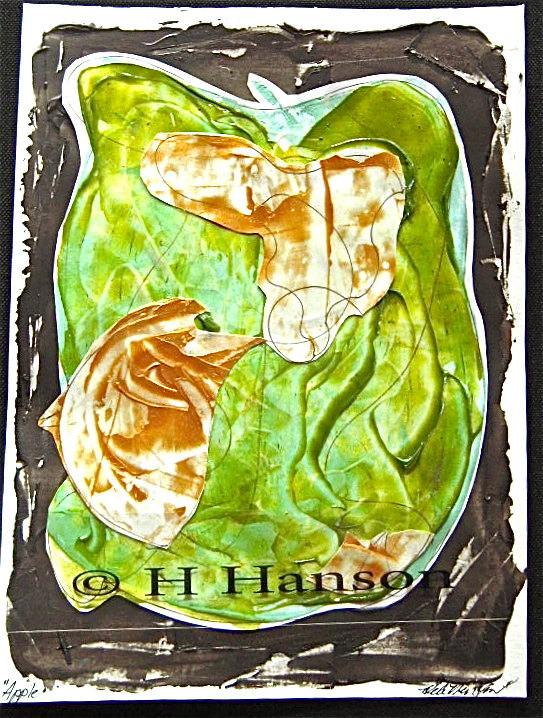
Apple

I appreciate the trust it takes to put your ideas into someone else’s hands and ask for help giving them form and expression. Whether or not it’s true what Daniel Pink says about connectors and synthesizers having a special place in civilization these days, and I like to think it is, helping artists be more successful is a permanently cool gig.

Meanwhile, jumps and twirls. Here’s to every day being different, with some more different than others. This hedge against conformity – respect for difference and celebration of meaning among differences whether stark or sublimely subtle – is the main, most substantive thing artists are expert at conjuring in our midst. It is extremely valuable to business. At this point in history, artists are selling what everyone else desperately needs.

DSCN5444

ARTIST’S PERSPECTIVE: Contributed by Helen N. Hanson

Until recently I had never experienced a truly inspirational collaboration. I took the opportunity to collaborate with Elinor Slomba.

Elinor is a storycraft consultant, and she is excellent at her job. Due to illness I have had to transfer from the medium of Acting to the medium of Collage. Same artist, different disciplines, different form of interpretation.

When I first started working with Elinor, I was a bit all over the place, scattered, and not quite sure how to move forward.

We have now worked together for several months and I am quite clear on the direction of my work, the discipline it requires to produce it, and the structuring of my time so that I work as an artist, I tend to my health, I practice meditation, and I practice Collage. Of course all at the same time, there is my family, our home, our pets, our bills, my dear and wonderful friends near and far. LIFE in big capital letters!

Elinor has introduced ideas that would not have occurred to me, she speaks better than I do, she represents me more articulately than I do and she listens well. She has consistently come up with innovative and unusual combinations that prove to be an excellent avenue of getting work out there.

We check in once a week; and in that meeting, we accomplish quite a lot of very fine work. it has been very interesting to listen to her knowledge of social media and her take on what’s a good combination of social media to drive the customer that is already looking for my work. I have learned the importance of navigating and always staying on task on the World Wide Web.

It took a bit of time to find my online limits.  It was a valuable lesson to learn. While I may have a ton of energy, my body, especially now when I am in a healing crisis, may need nothing more then rest and food/ or sleep.

It is been a true pleasure having Elinor as my storycraft consultant.  If you are an entrepreneur, an artist, a dancer, a blogger, a poet…etc., and want to take what you say and perhaps haven’t said clearly and put it out into the worldwide marketplace for thought and/or goods exchange, Elinor Slomba can assist you.

Visionquest

Cross-posted on Helen Hanson’s blog  – nontoxicspiritart.wordpress.com


westhaven


I am pleased to announce the selection of an awesome application for funding by the Connecticut chapter of the Awesome Foundation!

http://www.awesomefoundation.org/en/chapters/connecticut

This spring local artists and cultural organizers will lead citizens of West Haven in an attempt to break a world record for the largest street drawing.  Our implementation team is now forming, and a schedule of public meetings will be announced soon.

At the first meeting we will review the Scrum Guide.  We will seek feedback on using the Scrum framework to establish a flow for the project.  If there are no better ideas, and folks are game, why then we’ll probably just try it.

HAPPY NEW YEAR.  May we all find our hearts in our work in 2013.


To illustrate findings from the recently released Americans for the Arts study Arts & Economic Prosperity in the State of Connecticut IV: The Economic Impact of Nonprofit Arts and Cultural Organizations and Their Audiences, Randy Cohen told a measurable version of a memorable tale.   “It was two weeks until Date Night,” his story began.  Then he took about 50 arts leaders gathered at the Palace Theater in Waterbury on December 7th through a path of decisionmaking that links cultural performances with a host of other categories of economic activity.

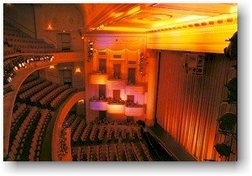
inside New Haven's Shubert Theater

inside New Haven’s Shubert Theater

First, by virtue of on-line ticket buying, the arts clearly tap skills from the technology sector in presenting and maintaining their websites.

Next, e-commerce interfaces with the banking industry.

Before Date Night, the gas tank might get filled up, benefitting a local convenience store.

On Date Night, before the show, a couple might go out to eat.  The chosen restaurant might feature local produce, benefitting area growers and the whole chain of entrepreneurs who bring food to the table.

Another ten bucks might go to a local parking garage.

At the theater, the couple may have a glass of wine, or a cup of tea.  Caterers benefit from this type of activity.  Local wines or teas might even be featured.

The theater building itself requires tradespeople in order to fulfill its function.  Plumbers, electricians and painters may be involved, as well as more specialized restorers and historic preservationists.

Ushers pass out programs, evidence that still others are being employed: designers, printers, paper/ink suppliers and deliverypeople.

Of course the show highlights the acting emsemble, its director and crew.  However, it is important to note that before the curtain ever rises, the arts organization presenting the performance is generating positive economic impact in its community.   How much, exactly?  Well, here are some conservative figures (all based on actual reported data, nothing projected) gathered from 337 arts organizations across Connecticut in 2010, using an input/output analysis model customized for local conditions and administered by a team from the School of Economics at Georgia Tech.

  • Nonprofit arts organizations and their audiences spent a total of 653 million dollars.  Audience spending accounts for $198 million; the rest is spent by the organizations themselves.
  • Arts organizations supported 18,314 Full-Time Equivalent jobs in Connecticut.  Because of the high touch, hands on, face-to-face nature of the industry, these jobs are necessarily local, unshippable overseas.
  • Arts spending triggered $59 million in local and state government revenue.
  • 12% of arts attenders came from outside the state.  For 67% of those individuals, the reason for coming to Connecticut was specifically to attend a particular cultural event.
  • 33,379 volunteers contributed 1.1 million manhours, calcluated at a rate of $21.36/hr to represent a $24 million value.

Nationally, the nonprofit arts sector is a $135 billion industry and supports 4.1 million jobs.  $5 billion is invested annually, triggering $21 billion in government revenue.  That is a huge positive return on investment.

Who has bought into this methodology and its results?  National organizations including the Business Civic Leadership Center (U.S. Chamber of Commerce); the National Conference of State Legislators; National League of Cities; the United States Conference of Mayors; the International Association of Destination Marketing; and Grantmakers in the Arts all have their logos on this publication.  The study – conducted nationally and released in state-specific segments based on customized models for local data gathering – repeats every five years.

The bottom line is a strong message to those who govern states and municipalities in the U.S.   Funding for Date Night is no black hole.

The bonus for cities?…Workers in today’s knowledge economy are choosing to work where they live, and creativity ranks as one of the top five skills sought-after by today’s business leaders.  This means that only cool places attract professional people, and when it comes to overall economic health, it’s the most creative, culturally vibrant communities that can deliver the goods.

“A guy asked me once on a consulting job what I knew about software development.  I told him, I don’t know anything about software development.  But I do know how you should do it.”  Meet Lee Devin, author of Artful Making: What Managers Need to Know About How Artists Work.  This first book, co-authored with Robert D. Austin of Harvard Business School, is regarded as something of a classic in entrepreneurial circles, bringing concepts from theater – “ensemble,” “improvisation,” and “rehearsal” – into the parlance of software developers.

Lately, Lee Devin’s name comes up every time someone in the know learns of my interest in strengthening natural alliances between the arts and start-up worlds.  We met at Agile Games 2012 – a conference dedicated to bringing the spirit of play into the workplace to boost productivity – and had a chance recently to speak about his new book, The Soul of Design, published by Stanford University Press.   Here are some sample pages:

http://www.sup.org/pages.cgi?isbn=0804757208;item=Excerpt_from_Part_One_pages;page=1

SLOMBA: The Soul of Design does not simply present ideas for consideration, it presents a whole vocabulary.

DEVIN: Plot…coherence…resonance…these are things that make a work of art or a product special or not special.  The individual elements are hard to define, but we recognize and understand their sum total when it all works. “I don’t know much about art, but I know what I like.” In this book we’re looking at that “what I like.”

SLOMBA:  I’m going to quote from the introduction. “A maker plots a structure to achieve coherence.  Coherence presupposes a set of interactions that generate resonance.  We call the results non-ordinary.”

DEVIN: Yup.

SLOMBA: What are some relevant changes you’ve seen in the software business since Artful Making was published in 2003?

DEVIN: Certainly in the last few years a change has taken place in the perception of what constitutes a cockamamie idea.  There is a new openness.  Responses to Agile and more personal and aesthetic modes of thinking about work have a much more positive entry into the conversation than they used to.  Back when I started it was pretty hard to get the ideas on the table.  I don’t mean to suggest the giant corporation is feverishly making room for this stuff or anything like that, but it does feel like the basic argument – that creative work must be approached in an artful way, a way that factors in human desires and tendencies and allows for an emergent outcome, not a strictly industrial way, a way that decides on an outcome first – has been made and accepted.  The difficulties lie in the way people are implementing the new, more collaborative approaches, more in the realms of logistics and space, not people’s attitudes.

SLOMBA:  How does your idea of “specialness” differ from the notion of industrial quality, plain and simple?

DEVIN:  Homo Aestheticus – I got the idea about that from Ellen Dissanayake, an Ethnologist.  One of major jumps we human beings made in evolutionary development was to decorate, to stripe some white clay down our noses, or to put a bison up on the cave wall: to make special.  To become individual. This impulse is very powerful.  I’m interested in the fact that it points to other skills and tendencies among the people who do it.  When a group of humans are aesthetically aware, continually looking to improve their surroundings, it signifies a deeper thing.  Homo Aestheticus, because s/he has become an individual, is a much more adaptable creature.

SLOMBA: Do you think choosing a special object can be a creative act?

DEVIN: Absolutely.  As an arts market gets established, the citizenry gets divided between makers and partakers.  And yet, as Susanne Langer points out, the act of personal response to an art work is just as creative.  You notice an object that speaks to you and you have an instant of recognition.  This instant doesn’t have a duration; it’s an event.  The “Oh, wow.”  You’ve made a huge choice in that response and the question then is not whether to follow up on that choice, but how.  We look at things, and the process becomes one that Aristotle calls puzzling out the form.   This kind of appreciation directly relates to making.  The aesthetic experience of appreciating an art form differs only in degree from the pleasure of making an art form.  Mind you, the degree is huge.

SLOMBA: Can you talk about originality?

DEVIN:  If a thing is completely new, it almost always appears formless.  We can’t perceive anything we don’t have a category for.  We need some similar experience for comparison, or we just don’t get it.  Take a Frenchman to a baseball game, and he’ll just wonder.  Like Americans at cricket.  People ask the wrong questions, because they don’t know the right ones.  They become baffled.

My generation lived through Samuel Beckett.  Waiting for Godot is what goes on while you’re waiting for the unspecified, emergent outcome.  People said at first, “This isn’t a play.  This doesn’t have any shape or form.  It’s just gaga.”  As long as people put their attention on who or what is Godot that remained the case, because the answer to that question has no relevance.  What’s going on on stage is this: people wait.  It’s a bleak life, they don’t know what’s going on; they have no short-term memory, much like your humble correspondent.  But when actors got up on stage to work the thing out, to puzzle out the form, they immediately got what Beckett wrote.  It was pretty hard not to get.

On the flip side, no artist wants to do something that somebody else already did.  We want to do something that we do now.  Every set of circumstances is unique in time.  The solution is unique, but there has to be a familiar context for it.

SLOMBA:  In your consulting work you’ve been getting Agile teams to be more creative and artistic; how about an arts group going Agile?

DEVIN: The artists to whom I’ve shown the Agile Manifesto simply look at me and say, “Duh.” “But that’s just common sense.” The principles of coherence and relevance absolutely apply to any object, process or idea.  Coherent things, coherent processes and ensembles are going to be more attractive and better at fulfilling their functions, regardless of sector.  Aesthetic regard, concern for coherence, is the ultimate in total quality control.

SLOMBA: What do you see down the line?

DEVIN: People are starting to realize you don’t get anywhere if you just pick bad items off the line and scold the guy who made them. Read Deming. Go further upstream and find the conditions that led to the errors in the first place.   One of the first things dramaturgs look for when we read scripts is the set of given circumstances.  Hamlet, in the throne room, in the second scene of Shakespeare’s play, is deeply pissed off, totally bummed.  If you’re an actor or trying to help an actor, you ask: what does Hamlet want?  What’s he trying to get? What’s he trying to get away from?  Why did he come into this room? And so on and on.

Dramaturgy is a wonderful way to unpack complicated objects and processes.  Your boss suddenly loses it…you want to look at that dramaturgically and ask: what are the things that this is the response to?  Not causes, given circumstances.

Any process that has room in it for asking these kinds of questions is going to be helpful these days, because things are very complicated.  Scrum has room.  The tricky thing is that a lot of people don’t know how to ask relevant questions, how to frame what they need to know, what they’re looking for.
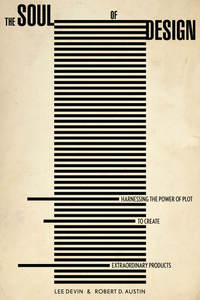
The Soul of Design suggests starting your inquiry with the final cause, the purpose for which the thing is made.  For any art object, or any non-ordinary product, the purpose of the thing is to be perfect of its kind.  Out in the world, the secondary purpose is to please people who are going to pay you for it.  First purpose is prime.

***

Lee Devin’s books can be purchased on Amazon in print form or for Kindle.  Here are the links – ENJOY!

http://www.amazon.com/Artful-Making-Managers-About-Artists/dp/0130086959

http://www.amazon.com/The-Soul-Design-Harnessing-Extraordinary/dp/0804757208

At the 2012 Bessie Awards, the New York dance “community of communities,” as organizer Lucy Sexton put it, reaffirmed itself on many levels while honoring its standouts.  One question wove in and out of the remarks from the stage: “How lucky am I?”

As in: how lucky am I to be doing what I love?  How lucky am I to be allowed to work with such amazing collaborators?  How lucky am I that people see my work?  How lucky am I to be able to live my passion?

On an obvious level, this is a ritual of gratitude.  Listen closer, and it rings as a statement about belonging.  It sounds like, “I’m right where I’m supposed to be.”

The award presenters and recipients made another act of belonging that night at the Apollo Theater: an affectionate rub of the golden tree stump positioned down right as each took the podium and prepared to speak.

I know there is a deeper story here than I’m prepared to tell.  Suffice it to say, this was an “insider” tree stump, and rubbing it an insider thing to do.  The performing arts are full of such things.

So are other fields.  I happened to catch world-class Alpine climber Conrad Anker at Yale Law School as part of The North Face Speaker Series.  He related how he and his two climbing partners, Renan Ozturk, and Jimmy Chin, promised the Hindu mountain dwellers for whom Himalayan summits are sacred that they would bring them back rocks from the very top to share their joy.  Last fall was the third time the three Americans had tried to scale the direct line up the Shark’s Fin of Meru (Garwhal), and they were successful.

What insider-type rituals go on in your workplace?  How could it become a place of adventure, a place of belonging?  And how often do YOU ask that golden question in the company of your colleagues, “How lucky am I?” 

Pop action hero Elizabeth Streb hosted the 2012 Bessie Awards at the historic Apollo Theater in Harlem, honoring New York dance artists who have broken new ground and/or made discoveries in the art form.  “Our moves are our message,” she remarked from the stage.  How true!

In that spirit, ta-DA! Here’s a move from business back into the arts today, hoping some people who might not normally follow “who’s who” in contemporary dance might just get curious.  It’s an illustrious roster, with a lot of great work to back up each name.

First of all, who is Elizabeth Streb?  I’ve written before about her in the context of garage art.  However, when she’s not throwing open the doors to her Brooklyn studio and inviting in the whole neighborhood, you might find her dancers, oh, I don’t know, walking down the SIDE of a FAMOUS monument in LONDON, maybe?

http://www.guardian.co.uk/stage/gallery/2012/jul/15/elizabeth-streb-london-dance-pictures

Streb Dance London: Dancers bungee off the Millennium Bridge

Among the artists honored with Bessies (named after Bessie Schoenberg, late, great professor of dance at Sarah Lawrence College), let’s hear it for Flamenco artist Israel Galvan, who created La Edad de Oro, performed at The Joyce Theater.  Let’s also agree to use the label of Flamenco loosely, as Galvan delves into the many possible futures such a specific form might take when freed from its original cultural moorings, melting into pure rhythm.  His native Spain has recognized him with a National Dance Award; this clip is from Barcelona in 2007:  http://www.youtube.com/watch?v=RfmCd-caWUU&feature=related

Paul Taylor was singled out for lifetime achievement although he is still achieving and may yet bring out another masterpiece.  Author of 137 ballets, “lyrical, muscular, dynamic and humane,” Taylor led himself through layers of rebellion against artistic conventions to create a whole new dance category and vocabulary.  His works are now included in the repertories of 40 dance companies around the world.  http://www.pbs.org/wnet/americanmasters/episodes/paul-taylor/about-paul-taylor/719

Outstanding Production in a large venue: Event by Merce Cunningham performed at the Park Avenue Armory.

Outstanding Performer in a large venue: Silas Riener in Split Sides by Merce Cunningham at the Brooklyn Academy of Music.

Oustanding Performer in a culturally specific form: Dormeshia Sumbry-Edwards for sustained achievement in performance and her work with Jason Samuels Smith at the Joyce Theater.  “Our mission was to show the audience what Charlie Parker’s music looks like,” she remarked in her acceptance speech.

Emily Johnson’s The Thank You Bar won for outstanding production in the context of the expanding field of contemporary arts, dance and performance practice.

http://www.nytimes.com/2011/11/12/arts/dance/emily-johnson-catalyst-in-the-thank-you-bar-review.html

Outstanding Performer in the expanding practice category was Nicole Mannarino in Devotion Study #1 by Sarah Michelon performed at the Whitney Museum.

Outstanding Emerging Choreographer: Rashaun Mitchell for NOX performed at Danspace Project.

Outstanding Production in a small capacity theater (under 400 seats): Antigone Sr./Twenty Looks or Paris is Burning at the Judson Church by Trajal Harrell performed at New York Live Arts.

Outstanding Performer in a small capacity theater: Omagbitshe Omagbemi for sustained achievement in the works of Keely Garfield, Ralph Lemon, David Gordon, Urban Bush Women, and many others.

2012 Bessie Award for Service to the Field of Dance went to Alice Tierstien, who teaches choreograhy to teens.

Outstanding Revived Work: The Shining by Yvonne Meier, presented by New York Live Arts, performed at The Invisible Dog Art Center.  This was a new award category in 2012.

In the category of Outstanding Sound Design or Composition, Faustin Linkyekula was recognized for the piece “more, more, more…future” performed at The Kitchen in the French Institute’s Crossing the Line Festival. http://www.thekitchen.org/event/274./0/1/

And for Outstanding Visual Design, Doris Dziersk for her design for Blessed by Meg Stuart, in which a cardboard set was pummelled by stage rain at New York Live Arts.  http://www.thirteen.org/sundayarts/blog/meg-stuarts-blessed-channelling-beckett/2101/

A 2012 Juried Bessie Award went to Souleymane Badolo, who performed live at the awards ceremony.

MANY THANKS for the evening’s success are due to the New York Dance and Performance League.  Co-production kudos go to Dance/NYC, an organization I helped jumpstart with Andrea Snyder (as we remembered together last night).  I hope that these moves back and forth between the arts and entrepreneurial business worlds might spark some investigation into a new sector for some people, inviting those rare and precious wow moments of aesthetic, intellectual and purely visceral enjoyment beyond the norm.

In his book On Dialogue, physicist and theorist David Bohm famously describes thought as not an individual act but a collective stream of meaning that is shared within a culture.  He suggests we strive for “proprioception” in our thought processes, which he defines as the perception of self-aware movement.

Proprioception is the kind of sixth sense that enables a bike rider, for example, to perform the required  slew of nano-corrections that support the body’s forward motion.   Bohm proposes a corresponding set of mental processes that enable avoidance of dead-end patterns (chief among them, aggression and suppression), improving the flow of meaning and the success of a culture.

What might this have to do with the Scrum framework for project management?  One striking thing at the recent Scrum Gathering in Barcelona (see scrumalliance.org) was an emphasis on the role of Product Owner in many of the sessions.   Getting that particular role “right” comes across as a critical lever for many Agile companies.

For those who aren’t familiar, a Product Owner is someone who works closely with a development team representing the needs and interests of the customer.  The Product Owner is chiefly responsible for articulating the project’s goals and acceptance criteria,  providing feedback and approving finished work at the end of each sprint.

According to the internal logic of Scrum, then, a Product Owner is engaged in a Bohm-like dialogue  with the team.  The degree of consciousness and subtlety of this dialogue can enable a kind of group proprioception, improving the quality of the team’s creative output.

With the right feedback, corrections can be achieved throughout the development process, making a product more powerful in its construction of a coherent set of meanings.  Because these meanings have been agreed-upon by the makers and those for whom a thing is being made, their realization in form is a kind of cultural success, a “win” for the culture.

This was evidently the case for Ericsson, a world leader in providing technology and services to telecommunications companies, as described by Peter Madden in his session Significance of Feedback Loops on the Journey to Agile, part of the “Engineering Wars” program track at Barcelona.  It wasn’t until they had made the Product Owner role full-time that his teams had enough customer feedback to be particularly effective in transitioning away from a waterfall approach.   For Madden, the urgent need to do so is primarily about velocity.

Because it can achieve creative proprioception by virtue of structured feedback loops, Scrum is capable of bringing thought into form – and into the marketplace – faster than traditional methods of project management.  These days, throwing work “over the wall” from one team to the next, as proscribed by the waterfall style, just can’t carry a dialogue forward fast enough.