Archives for category: E. Slomba Arts Interstices

Speed networking is a good model to adapt when the goal is to construct any live, two-sided social platform.  It provides both sets of users with a chance to quickly discover what lies between the axes of choice and chance.

Art Space in New Haven is conducting a speed networking event for artists and curators on Sunday, September 30th.  I will be participating as one of the curators.  http://artspacenh.org/events/SpeedNet12Member

As I hear about capital projects that have gone bust from overambition and organizational stress rooted in conflicting views about how much it is possible to know in advance, it seems apropos to put this thinker’s conclusion forward, grounded in arts management as a lived experience:

“It is not a matter of saying analytically, ‘what are the requirements, how best they could be organized?’ This will usually bring into existence something tame, conventional, often cold. The science of theatre building must come from studying what it is that brings about the more vivid relationships between people.“ – Director Peter Brook

The science of theater building sounds like every project worth completing right now. MANY THANKS to John Thackara for including the quote in his excellent 2003 essay, The Post-Spectacular City.

Thackara’s essay is a useful grounding point for heady, interrelated discussions taking place in the emergent design worlds. Whether it’s culture hacking or creative placemaking, any good idea can go awry in a heartbeat of “too busy to care” or “too about-to-be-funded to care” about the internal logic of what we’re doing and how we’re doing it. There is also (ahem) what David Ehrenfield called the plain, old “arrogance of humanism” to contend with. It happens.

I attended a memorable speech Toni Morrison gave twenty-odd years ago at a conference in Washington, DC in which she made the point: ”there is no Golden Age.” We cannot with integrity hark back to periods in history which relied on slavery and other forms of oppression to organize the leisure time of its decision-makers to indulge in politics and the arts. That’s what I see today when presented with a set of Greek columns, for instance, in Chicago’s Millennium Park. A false harking back and a collective call towards inauthenticity – in other words, a spectacle. We cannot even hark back to the golden ages of our own respective movements, times when the inside circle of a given scene was very small (we were in it, of course!) and things were cooler.

However, I do believe we can achieve something golden in our work across sectors as we imagine things differently. These glimmers, these clues, are by definition ephemeral and provisional. They multiply out of concern for vivid relationships between people. We must make space for dialogue and co-dreaming. For the invention of new, shared meanings. As we muddle through figuring this stuff out, we must include ourselves. As we take responsibility for prioritizing individuals and interactions over tools and processes (wait, who’s manning the Agile Manifesto?), we supply others with useful models for differentiating the vivid from the bland.

Don’t we all want a taste of the post-spectacular? Something to carry our time spent in cities, theaters, and workplaces beyond the tame, cold and conventional? This is not something that will be delivered to us. It is something we must make.

Companies like Morning Star are figuring out vivid relationships at work AND figuring out how to succeed economically. Let’s study them closely, for inspiration and information rather than exact, cookie-cutter replication.

Meanwhile, we’ll walk across Millennium Park to another sculpture affectionately known by Chicagoans as “The Bean.” Here, a reflective surface views its viewers, reminding us of the absurdity of standing in front of a hunk of metal trying – alongside a bunch of strangers – to see something wondrous. It is simply the act of seeing that is wondrous, the public celebration of NOW, and the unrepeatable experience in the infinite reflections every moment brings.

Creative Placemaking Funders Symposium

It has been an exciting journey as Connecticut builds its platform for articulating the relevance of cultural vitality to just about every other part of life, urban and otherwise.  Grant guidelines are now complete – colleagues in the arts community and I have had a hand in shaping them over the past year through meetings and forums held across the state, at New Haven’s Long Wharf Theater and elsewhere.

The main question has been: how do we link cultural activity with specific economic drivers to make Connecticut’s places more livable?  As the Department of Economic and Community Development defines the resources it will bring, local Arts Councils activate their networks, and other sectors engage, the conversation gets bigger and more interesting.

I will be attending this upcoming event at the Bushnell Center in Hartford – happy to customize notes for anyone who wants a briefing.

A new approach to leadership that includes stewardship of the living rather than management of the machine?  If the idea interests you, please familiarize yourself with the Stoos Communique, prepared by Agilists and creative thinkers who gathered in Switzerland in January to determine common ground in launching a true revolution to make work more human.

After all, what’s more punk rock?  To stand outside of a building and hold up a sign that says “occupy,” or to actually physically occupy a spot within an existing set of social relations in the workplace and transform these relations by bringing your very best self to the occasion and demanding nothing less from others?

I, for one, believe in a better way…

Many cities have experimented with art openings and related cultural events in a given district or neighborhood engineered to coincide on a monthly basis.  Unfortunately, such predicability can lead to ennui among scenesters.  New Haven is trying something new in its Ninth Square.

The organization on9 has a plan for September which brings to mind a large note-to-self displayed in a former boss’s office: Remember to Breathe!  The public is invited to use this idea as both a prompt and a lens through which to experience culture.

Breathe On9  happens tomorrow evening, September 7th, starting at 6pm in Pitkin Plaza (behind Bru Cafe, in front of Devil’s Bike Gear).  See http://www.on9newhaven.com/  for a full schedule of offerings.

The First Friday event celebrates reinvigorated streetlife and the change of season with a concentrated sampling of body/mind alignment systems.  It will also show off the district’s lean and green foodscape, e.g., Elm City Market, a new(ish) coop where membership is not required and the vast majority of products come from within a 250-mile radius.

A closing reception for three exhibitions at Artspace is fitted within a panoply of experiential services that promote wellbeing.  The art is not on display in the casual manner of a craft fair nor necessarily on view to be “read” and deconstructed by critics (though both can be fun, when done well).  Rather, in this context art is assertively occupying its place as a source of mental nourishment and aesthetic satisfaction without which urbanity would be incomplete.

Do people really want to be this heavily curated?  Is the theme idea working to boost business from pedestrian traffic?  Is the Ninth Square authentically a special place?  Do such events reinforce cultural coolness?  Last month’s photo display from the Noise on9 event appears validating…but I just may check in for follow-up with a few of the participating artists and organizations.

http://www.on9newhaven.com/home/noise-on-9-august-3/noiseon9-highlights/

First Friday themes upcoming this fall:

October / Creative on9

November / Faces on9

December / Shine on9

The DIY ethic that has fueled underground scenes since the 1980s is alive and palpable in artist-run spaces across the country.  Despite much handwringing at the recent Aspen Ideas Festival in Colorado –http://www.aspenideas.org/festival/overview – many creative people do still believe it is important to bring people together face-to-face in a physical space to experience art and find ways to make it happen.  Whether evolving incrementally or borne from a conceptual vision, these spaces are an important part of the ecosystem on which innovation depends.  Here are two I visited on my recent Agileseed Tour.  (Please see previous post titled Agileseeding! for more background on this.)

Agileseed Tour Destination: Omaha, NE

Omaha is an unexpectedly quirky city, where the editor of a local weekly put in a mayoral bid as a kind of performance art.  On the main drag of Dodge Street, a handful of painters and scupltors including Dave Jenowe (pictured below with his work) share studio space in a split-level storefront.  After critiquing each other long enough, they decided to invite the public in for periodic Saturday night openings.   Says Jenowe, “It was a simple thing, originally.  It started with just three of us.  We made work, and it needed to be seen.”
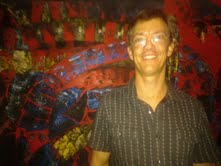
Social media brought people in the door, and the venue, called Studio…Gallery, has since built a solid reputation among an alternative downtown crowd.  Step by succinct step, it has added a jazz music series and comedy nights.  The space itself has evolved to accommodate growing programs, now sporting a tiny stage downstairs with superior acoustics.  Meanwhile, a core group of colleagues continue to pursue independent artistic investigations in a shared workspace.

Jenowe continues, “We are always tweaking, but we continue to have a good time.  It’s great to see new people discover the space and be surprised by the quality and diversity, to have it surpass their expectations for what they might find here.  Jamming with musicians from New York and mixing with local artists, it just makes you feel glad and inspired to keep going, to keep making new work.”

Agileseed Tour Destination: Twin Cities, MN

The Bindery Projects, named after its location above a longrunning book bindery in St. Paul, is the brainchild of Caroline Kent and Nate Young (pictured below).  Their mission is “…to show dope work and validate practice through dialiectic democratic social disourse.”  The pair has a curatorial calendar booked through spring of 2013.

http://thebinderyprojects.com/thebindery_projects/visit.html

When I visited in early August, Nate and Caroline were prepping to hang 47 drawings by Nyeema Morgan, whom Young met at the Skowhegan Center in Maine.  The Dubious Sum of Vaguely Discernable Parts, closing Sept. 2, 2012, uses textual variations on cake recipe instructions along with abstract photographs of individual baking ingredients to explore the search for a perfect system.

Says Young, “We might not have a ton of people coming through, the space isn’t that big.  But the ones who do are key people, influencers.  They’re paying attention.”  In fact this is true, as I heard about The Bindery Projects long before arriving in the Twin Cities area, from the Director of ArtSpace in New Haven, CT – artspacenh.org.

Art galleries conduct their business in an inherently networked and iterative manner, releasing work to the public in regularly scheduled increments.  Exhibitions take place over and over in the same space, and as they do, a body of knowledge develops around how to succeed and improve.   Artists intuitively seek to assemble the most viable chunks of work for release, even at small scale or in-progress stages, because it makes good sense.  What they may not know is that, in Scrum circles, this is known as the vertical slice.

Running a gallery on a DIY basis should be recognized as one of the most authentically agile ways of working.  People and interactions are reliably more important than tools and processes.  Those who run such spaces deserve credit and support as incubators for creativity and innovation, nimbly adaptive yet true to what they represent.

The Agile teams forming in today’s workplaces are essentially trying to function like artists.  Those leading the charge towards Agile business transformation should seek out these creative and highly productive scene-makers, talk to them regularly, and make it a point to visit the exhibitions and other programs that artists have developed and released in their communities.

At the height of its fame in Detroit, Motown was an agile co-work environment.  This made the company’s culture conducive to high-productivity and greatness beyond individual talent.

PROXIMITY: Berry Gordy purchased nine houses on the same downtown block to ensure collaborators could be physically close.

SPRINTS: While records were being made, artists had 24/7 access to the studio.   No sleeping on a good idea – artists were encouraged to get in there and work in out no matter what time of day.  This led to a high-energy intensity that comes across in the finished product.

CUSTOMER FEEDBACK: Kids from the neighborhood were regularly invited in for beta testing of new tunes, and to play around with rhythm and help compose  by doing what they loved.  This was part of the local culture of Detroit: if they weren’t in school or dating, kids were usually making music together.  Motown tapped into this natural, ongoing dialogue as a force guiding its development.

CONTINUOUS IMPROVEMENT:  Talent came in raw and got developed.  Healthy competition ensued as styles were refined and acts tightened.  Artists were constantly checking out each other’s work and using these observations to strive to best themselves.

COLLABORATION:  After recording the first mix of  a new song, all the artists would come in and have a listen.  The QA criterion was this – “if you were down to your last dollar, woud you want to spend it on a sandwich or this record?”  If long pauses were evident as people thought this through, then it was worth spending some time on it remixing.  If people were considering which type of bread they would order while the music was still playing, a tune was scrapped.  After much time working together, these opinions were mostly unanimous.

SAFETY:  A bad decision, a bad day or a bad record would not break the label’s trust in an artist.  The label nurtured talent over time and was relationship-focused.

RETROSPECTIVES: Time was regularly  set aside to discuss what worked and what didn’t work about a given project.  Opinions were invited from across the board.

LEADERSHIP: At the end of the day, Berry Gordy was accountable to his team and for his team of artists and managers.  The family-style structure of the organization meant that high levels of personal commitment were at stake.

In today’s co-work spaces – cities like New Haven (The Grove), Toronto (The Centre for Social Innovation) and Minneapolis (Coco) – welcome start-ups, creatives and nonprofits to co-exist and learn from one another.  Agilists can be encouraged by the example of Motown and its innovations in co-branding of place, company and industry that still make Detroit worth visiting.

On the Agileseed Tour, I appreciated Motown’s legacy of creative placemaking tied to aggressively focused development of collective talent.  MANY THANKS to the Motown Historical Museum for its rich interpretation, and to Paul Eley who encouraged me to stop in and consider these connections.

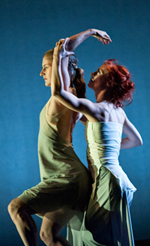
Bates Dance Festival presented a luscious performance by Kate Weare Company on July 28th.  Wisely, the Saturday night programming included an Inside Dance pre-performance talk by dance critic Debra Cash.  Ms. Cash took just the right amount of time to illuminate the choreographer’s approach and give us some reference points.

Kate Weare has built a white hot trending company that does not count beats.  Instead, the dancers co-locate their highly synchronized parts by listening to each other’s breaths.

From the front row, at performance time, I could also hear them breathing.  Knowing their lungs were the bellows to propulse minds, tendons and ball-joints toward precisely executed micromovements added new layers of sensory information and interest.   This is hypersensitivity at its best, derived from the very seat of our animal intellect.

At a certain point, the medium of contemporary dance approached in this way triggers a particular sublimity.  Embodied skill becomes the material from which art is made.

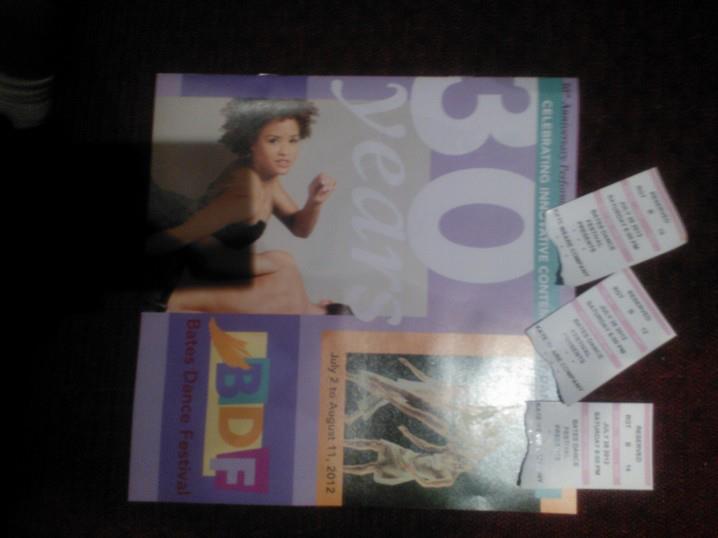
2012 is the 30th Anniversary of a true artist-centered community.  It is also, not coincidentally, the 25th year of tenure for Laura Faure, the guiding force that has made Lewiston, Maine a center of creative gravity in the contemporary dance world internationally.  It was meaningful and logical that Bates was the first stop on the Agileseed Tour, as it was from Laura that I first witnessed the curatorial power that comes from trusting self-organization and allowing the inner structure of a collaboration to emerge and reveal itself rather than be imposed.  We worked together for five years finding resources to realize Festival artists’ next best ideas, working at high velocity in the climate of extreme uncertainty and entrepreneurial fierceness that is nonprofit arts fundraising.

The evening’s performance was the award-winning Kate Weare and Company, featuring Kate’s breakout work Drop Down which received an Audience Choice selection when it premiered at The Joyce Theater in New York in 2006.  The company’s newest work in-progress, Dark Lark, will premiere at Brooklyn Academy of Music.  BDF is one of the co-commissioners.

Dining at the college cafeteria beforehand I ran into Boston-based dance critic Debra Cash, who delivers contextual insight to the works performed on stage in the form of Inside Dance Talks.  Another part of her professional life is dedicated to helping companies prepare for and navigate culture change.  We discussed the upcoming Agile Culture conference.

Meanwhile, my oldest son was rhapsodizing about the Festival as a field of earliest memories from when he was toddler-in-tow.  There were a host of children in-residence with their parents this summer, a good sign that the dance world is finding its way toward healthy work-life balance.

Aimee Petrin, a longtime colleague and Director of Portland Arts, presented Laura with a lovely and well-deserved tribute before curtain.  And Laura pointed out the remarkable press the Festival has gotten this summer – including this coverage on Maine Public Television:

http://video.mpbn.net/video/2255629111

Musings in progress…more to follow…

The Agileseed Tour has begun – a cross-continental excursion to arts centers, city halls and creative businesses over the course of 30 days to share innovative ideas and investigate the look and feel of Agile projects in action.   Among the sites I’m most excited about:

Bates Dance Festival in Lewiston, ME

Toronto’s Center for Social Innovation

Detroit’s Motown Museum

Nokia Chicago

Walker Art Center and the Minneapolis start-up community

Helena, MT – Shakespeare, Montana-style, at the Civic Center

San Fancisco’s City Hall and public art

Zero One in San Jose, where art and technology meet to shape the future

and more…because interesting things happen when forward-thinking minds collide.

Meanwhile, the Agile Culture Conference is coming up in Boston and Philadelphia September 13-14, based around the premise that culture has become the gating factor for creativity, learning and productivity in the workplace.

http://newtechusa.net/culture-con/

And the Scrum Alliance is hosting a global gathering in Barcelona, Spain Oct 1-3.  Among the highlights known to date?  Richard Kasperowski of Agile Boston, with details of a radical six-week long Open Space process which resulted in his team’s reconfiguration of their work space to be more human.   http://www.scrumalliance.org/events/464-barcelona–global-event

I would enjoy hearing stories of your own Agileseeding adventures, as well as news of related upcoming events.

CHEERS!