Archives for category: International

Worldwide, organizational culture is on the move.

hephtanuxia_by_fraxialmadness3-d5xagrf

New orders are emerging that are better suited to our complex era than those that came to the forefront during the Industrial Revolution.  There is so much on this topic to observe and examine, I have invited colleagues to participate in a trans-Agile metaspace to explore these shifting paradigms.

  • March 22 we will discuss cell-like work structures, including this awesome material from the Betacodex Network:  http://www.betacodex.org/node/1316
  • May 10 the focus will be on sociocracy as a workable and equitable governance structure in practice at Green Haven and Agile Boston.

The group is based out of The Grove in downtown New Haven,  a thriving cowork space and one of four designated Innovation Hubs active in the State of Connecticut (www.grovenewhaven.com).  Inspired by the Stoos Network (www.stoosnetwork.org), our first meeting was held on World Stoos Day, Jan 25, 2012.  It may evolve into a Stoos Satellite or remain a platform that is broader than one particular movement or model.  I am curious to experience how the principle of self-organization animates and propels our discussions.

Meanwhile, here’s to the beauty of spontaneous order!

“A guy asked me once on a consulting job what I knew about software development.  I told him, I don’t know anything about software development.  But I do know how you should do it.”  Meet Lee Devin, author of Artful Making: What Managers Need to Know About How Artists Work.  This first book, co-authored with Robert D. Austin of Harvard Business School, is regarded as something of a classic in entrepreneurial circles, bringing concepts from theater – “ensemble,” “improvisation,” and “rehearsal” – into the parlance of software developers.

Lately, Lee Devin’s name comes up every time someone in the know learns of my interest in strengthening natural alliances between the arts and start-up worlds.  We met at Agile Games 2012 – a conference dedicated to bringing the spirit of play into the workplace to boost productivity – and had a chance recently to speak about his new book, The Soul of Design, published by Stanford University Press.   Here are some sample pages:

http://www.sup.org/pages.cgi?isbn=0804757208;item=Excerpt_from_Part_One_pages;page=1

SLOMBA: The Soul of Design does not simply present ideas for consideration, it presents a whole vocabulary.

DEVIN: Plot…coherence…resonance…these are things that make a work of art or a product special or not special.  The individual elements are hard to define, but we recognize and understand their sum total when it all works. “I don’t know much about art, but I know what I like.” In this book we’re looking at that “what I like.”

SLOMBA:  I’m going to quote from the introduction. “A maker plots a structure to achieve coherence.  Coherence presupposes a set of interactions that generate resonance.  We call the results non-ordinary.”

DEVIN: Yup.

SLOMBA: What are some relevant changes you’ve seen in the software business since Artful Making was published in 2003?

DEVIN: Certainly in the last few years a change has taken place in the perception of what constitutes a cockamamie idea.  There is a new openness.  Responses to Agile and more personal and aesthetic modes of thinking about work have a much more positive entry into the conversation than they used to.  Back when I started it was pretty hard to get the ideas on the table.  I don’t mean to suggest the giant corporation is feverishly making room for this stuff or anything like that, but it does feel like the basic argument – that creative work must be approached in an artful way, a way that factors in human desires and tendencies and allows for an emergent outcome, not a strictly industrial way, a way that decides on an outcome first – has been made and accepted.  The difficulties lie in the way people are implementing the new, more collaborative approaches, more in the realms of logistics and space, not people’s attitudes.

SLOMBA:  How does your idea of “specialness” differ from the notion of industrial quality, plain and simple?

DEVIN:  Homo Aestheticus – I got the idea about that from Ellen Dissanayake, an Ethnologist.  One of major jumps we human beings made in evolutionary development was to decorate, to stripe some white clay down our noses, or to put a bison up on the cave wall: to make special.  To become individual. This impulse is very powerful.  I’m interested in the fact that it points to other skills and tendencies among the people who do it.  When a group of humans are aesthetically aware, continually looking to improve their surroundings, it signifies a deeper thing.  Homo Aestheticus, because s/he has become an individual, is a much more adaptable creature.

SLOMBA: Do you think choosing a special object can be a creative act?

DEVIN: Absolutely.  As an arts market gets established, the citizenry gets divided between makers and partakers.  And yet, as Susanne Langer points out, the act of personal response to an art work is just as creative.  You notice an object that speaks to you and you have an instant of recognition.  This instant doesn’t have a duration; it’s an event.  The “Oh, wow.”  You’ve made a huge choice in that response and the question then is not whether to follow up on that choice, but how.  We look at things, and the process becomes one that Aristotle calls puzzling out the form.   This kind of appreciation directly relates to making.  The aesthetic experience of appreciating an art form differs only in degree from the pleasure of making an art form.  Mind you, the degree is huge.

SLOMBA: Can you talk about originality?

DEVIN:  If a thing is completely new, it almost always appears formless.  We can’t perceive anything we don’t have a category for.  We need some similar experience for comparison, or we just don’t get it.  Take a Frenchman to a baseball game, and he’ll just wonder.  Like Americans at cricket.  People ask the wrong questions, because they don’t know the right ones.  They become baffled.

My generation lived through Samuel Beckett.  Waiting for Godot is what goes on while you’re waiting for the unspecified, emergent outcome.  People said at first, “This isn’t a play.  This doesn’t have any shape or form.  It’s just gaga.”  As long as people put their attention on who or what is Godot that remained the case, because the answer to that question has no relevance.  What’s going on on stage is this: people wait.  It’s a bleak life, they don’t know what’s going on; they have no short-term memory, much like your humble correspondent.  But when actors got up on stage to work the thing out, to puzzle out the form, they immediately got what Beckett wrote.  It was pretty hard not to get.

On the flip side, no artist wants to do something that somebody else already did.  We want to do something that we do now.  Every set of circumstances is unique in time.  The solution is unique, but there has to be a familiar context for it.

SLOMBA:  In your consulting work you’ve been getting Agile teams to be more creative and artistic; how about an arts group going Agile?

DEVIN: The artists to whom I’ve shown the Agile Manifesto simply look at me and say, “Duh.” “But that’s just common sense.” The principles of coherence and relevance absolutely apply to any object, process or idea.  Coherent things, coherent processes and ensembles are going to be more attractive and better at fulfilling their functions, regardless of sector.  Aesthetic regard, concern for coherence, is the ultimate in total quality control.

SLOMBA: What do you see down the line?

DEVIN: People are starting to realize you don’t get anywhere if you just pick bad items off the line and scold the guy who made them. Read Deming. Go further upstream and find the conditions that led to the errors in the first place.   One of the first things dramaturgs look for when we read scripts is the set of given circumstances.  Hamlet, in the throne room, in the second scene of Shakespeare’s play, is deeply pissed off, totally bummed.  If you’re an actor or trying to help an actor, you ask: what does Hamlet want?  What’s he trying to get? What’s he trying to get away from?  Why did he come into this room? And so on and on.

Dramaturgy is a wonderful way to unpack complicated objects and processes.  Your boss suddenly loses it…you want to look at that dramaturgically and ask: what are the things that this is the response to?  Not causes, given circumstances.

Any process that has room in it for asking these kinds of questions is going to be helpful these days, because things are very complicated.  Scrum has room.  The tricky thing is that a lot of people don’t know how to ask relevant questions, how to frame what they need to know, what they’re looking for.
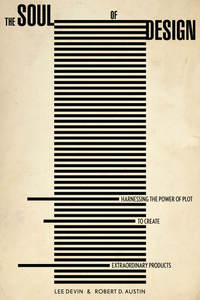
The Soul of Design suggests starting your inquiry with the final cause, the purpose for which the thing is made.  For any art object, or any non-ordinary product, the purpose of the thing is to be perfect of its kind.  Out in the world, the secondary purpose is to please people who are going to pay you for it.  First purpose is prime.

***

Lee Devin’s books can be purchased on Amazon in print form or for Kindle.  Here are the links – ENJOY!

http://www.amazon.com/Artful-Making-Managers-About-Artists/dp/0130086959

http://www.amazon.com/The-Soul-Design-Harnessing-Extraordinary/dp/0804757208

At the 2012 Bessie Awards, the New York dance “community of communities,” as organizer Lucy Sexton put it, reaffirmed itself on many levels while honoring its standouts.  One question wove in and out of the remarks from the stage: “How lucky am I?”

As in: how lucky am I to be doing what I love?  How lucky am I to be allowed to work with such amazing collaborators?  How lucky am I that people see my work?  How lucky am I to be able to live my passion?

On an obvious level, this is a ritual of gratitude.  Listen closer, and it rings as a statement about belonging.  It sounds like, “I’m right where I’m supposed to be.”

The award presenters and recipients made another act of belonging that night at the Apollo Theater: an affectionate rub of the golden tree stump positioned down right as each took the podium and prepared to speak.

I know there is a deeper story here than I’m prepared to tell.  Suffice it to say, this was an “insider” tree stump, and rubbing it an insider thing to do.  The performing arts are full of such things.

So are other fields.  I happened to catch world-class Alpine climber Conrad Anker at Yale Law School as part of The North Face Speaker Series.  He related how he and his two climbing partners, Renan Ozturk, and Jimmy Chin, promised the Hindu mountain dwellers for whom Himalayan summits are sacred that they would bring them back rocks from the very top to share their joy.  Last fall was the third time the three Americans had tried to scale the direct line up the Shark’s Fin of Meru (Garwhal), and they were successful.

What insider-type rituals go on in your workplace?  How could it become a place of adventure, a place of belonging?  And how often do YOU ask that golden question in the company of your colleagues, “How lucky am I?” 

Pop action hero Elizabeth Streb hosted the 2012 Bessie Awards at the historic Apollo Theater in Harlem, honoring New York dance artists who have broken new ground and/or made discoveries in the art form.  “Our moves are our message,” she remarked from the stage.  How true!

In that spirit, ta-DA! Here’s a move from business back into the arts today, hoping some people who might not normally follow “who’s who” in contemporary dance might just get curious.  It’s an illustrious roster, with a lot of great work to back up each name.

First of all, who is Elizabeth Streb?  I’ve written before about her in the context of garage art.  However, when she’s not throwing open the doors to her Brooklyn studio and inviting in the whole neighborhood, you might find her dancers, oh, I don’t know, walking down the SIDE of a FAMOUS monument in LONDON, maybe?

http://www.guardian.co.uk/stage/gallery/2012/jul/15/elizabeth-streb-london-dance-pictures

Streb Dance London: Dancers bungee off the Millennium Bridge

Among the artists honored with Bessies (named after Bessie Schoenberg, late, great professor of dance at Sarah Lawrence College), let’s hear it for Flamenco artist Israel Galvan, who created La Edad de Oro, performed at The Joyce Theater.  Let’s also agree to use the label of Flamenco loosely, as Galvan delves into the many possible futures such a specific form might take when freed from its original cultural moorings, melting into pure rhythm.  His native Spain has recognized him with a National Dance Award; this clip is from Barcelona in 2007:  http://www.youtube.com/watch?v=RfmCd-caWUU&feature=related

Paul Taylor was singled out for lifetime achievement although he is still achieving and may yet bring out another masterpiece.  Author of 137 ballets, “lyrical, muscular, dynamic and humane,” Taylor led himself through layers of rebellion against artistic conventions to create a whole new dance category and vocabulary.  His works are now included in the repertories of 40 dance companies around the world.  http://www.pbs.org/wnet/americanmasters/episodes/paul-taylor/about-paul-taylor/719

Outstanding Production in a large venue: Event by Merce Cunningham performed at the Park Avenue Armory.

Outstanding Performer in a large venue: Silas Riener in Split Sides by Merce Cunningham at the Brooklyn Academy of Music.

Oustanding Performer in a culturally specific form: Dormeshia Sumbry-Edwards for sustained achievement in performance and her work with Jason Samuels Smith at the Joyce Theater.  “Our mission was to show the audience what Charlie Parker’s music looks like,” she remarked in her acceptance speech.

Emily Johnson’s The Thank You Bar won for outstanding production in the context of the expanding field of contemporary arts, dance and performance practice.

http://www.nytimes.com/2011/11/12/arts/dance/emily-johnson-catalyst-in-the-thank-you-bar-review.html

Outstanding Performer in the expanding practice category was Nicole Mannarino in Devotion Study #1 by Sarah Michelon performed at the Whitney Museum.

Outstanding Emerging Choreographer: Rashaun Mitchell for NOX performed at Danspace Project.

Outstanding Production in a small capacity theater (under 400 seats): Antigone Sr./Twenty Looks or Paris is Burning at the Judson Church by Trajal Harrell performed at New York Live Arts.

Outstanding Performer in a small capacity theater: Omagbitshe Omagbemi for sustained achievement in the works of Keely Garfield, Ralph Lemon, David Gordon, Urban Bush Women, and many others.

2012 Bessie Award for Service to the Field of Dance went to Alice Tierstien, who teaches choreograhy to teens.

Outstanding Revived Work: The Shining by Yvonne Meier, presented by New York Live Arts, performed at The Invisible Dog Art Center.  This was a new award category in 2012.

In the category of Outstanding Sound Design or Composition, Faustin Linkyekula was recognized for the piece “more, more, more…future” performed at The Kitchen in the French Institute’s Crossing the Line Festival. http://www.thekitchen.org/event/274./0/1/

And for Outstanding Visual Design, Doris Dziersk for her design for Blessed by Meg Stuart, in which a cardboard set was pummelled by stage rain at New York Live Arts.  http://www.thirteen.org/sundayarts/blog/meg-stuarts-blessed-channelling-beckett/2101/

A 2012 Juried Bessie Award went to Souleymane Badolo, who performed live at the awards ceremony.

MANY THANKS for the evening’s success are due to the New York Dance and Performance League.  Co-production kudos go to Dance/NYC, an organization I helped jumpstart with Andrea Snyder (as we remembered together last night).  I hope that these moves back and forth between the arts and entrepreneurial business worlds might spark some investigation into a new sector for some people, inviting those rare and precious wow moments of aesthetic, intellectual and purely visceral enjoyment beyond the norm.

In his book On Dialogue, physicist and theorist David Bohm famously describes thought as not an individual act but a collective stream of meaning that is shared within a culture.  He suggests we strive for “proprioception” in our thought processes, which he defines as the perception of self-aware movement.

Proprioception is the kind of sixth sense that enables a bike rider, for example, to perform the required  slew of nano-corrections that support the body’s forward motion.   Bohm proposes a corresponding set of mental processes that enable avoidance of dead-end patterns (chief among them, aggression and suppression), improving the flow of meaning and the success of a culture.

What might this have to do with the Scrum framework for project management?  One striking thing at the recent Scrum Gathering in Barcelona (see scrumalliance.org) was an emphasis on the role of Product Owner in many of the sessions.   Getting that particular role “right” comes across as a critical lever for many Agile companies.

For those who aren’t familiar, a Product Owner is someone who works closely with a development team representing the needs and interests of the customer.  The Product Owner is chiefly responsible for articulating the project’s goals and acceptance criteria,  providing feedback and approving finished work at the end of each sprint.

According to the internal logic of Scrum, then, a Product Owner is engaged in a Bohm-like dialogue  with the team.  The degree of consciousness and subtlety of this dialogue can enable a kind of group proprioception, improving the quality of the team’s creative output.

With the right feedback, corrections can be achieved throughout the development process, making a product more powerful in its construction of a coherent set of meanings.  Because these meanings have been agreed-upon by the makers and those for whom a thing is being made, their realization in form is a kind of cultural success, a “win” for the culture.

This was evidently the case for Ericsson, a world leader in providing technology and services to telecommunications companies, as described by Peter Madden in his session Significance of Feedback Loops on the Journey to Agile, part of the “Engineering Wars” program track at Barcelona.  It wasn’t until they had made the Product Owner role full-time that his teams had enough customer feedback to be particularly effective in transitioning away from a waterfall approach.   For Madden, the urgent need to do so is primarily about velocity.

Because it can achieve creative proprioception by virtue of structured feedback loops, Scrum is capable of bringing thought into form – and into the marketplace – faster than traditional methods of project management.  These days, throwing work “over the wall” from one team to the next, as proscribed by the waterfall style, just can’t carry a dialogue forward fast enough.

What inspires more trust?  Someone promising the “best” way?  Or someone promising a “better” way?

(Must interrupt briefings from the Scrum Gathering in Barcelona to offer the following passage from Walt Whitman’s Leaves of Grass.  It can be read as a love letter to the creative workplace, pulsing with people who see “perfect” as a verb.  ENJOY!)

From A Song of the Rolling Earth, 3-4

***

I swear I see what is better than to tell the best,

It is always to leave the best untold.

When I undertake to tell the best I find I cannot,

My tongue is ineffectual on its pivots,

My breath will not be obedient to its organs,

I become a dumb man.

The best of the earth cannot be told anyhow, all or any is best,

It is not what you anticipated, it is cheaper, easier, nearer,

Things are not dismiss’d from the places they held before,

The earth is just as positive and direct as it was before,

Facts, religions, improvements, politics, trades, are as real as

before,

But the soul is also real, it too is positive and direct,

No reasoning, no proof has establish’d it,

Undeniable growth has establish’d it.

Delve!  mould!  pile the words of the earth!

Work on, age after age, nothing is to be lost,

It may have to wait long, but it will certainly come in use,

When the materials are all prepared and ready, the architects shall appear.

Change equals loss for many people.  Accordingly, a period of adjustment is required and can be aided with communicative leadership.  This was one of the messages delivered in “Not Your Mother’s Agile Transformation,” a Wednesday morning session at the recent Scrum Gathering co-presented by Katrina Bales & Keely Killpack.   It is no longer reasonable to expect change simply “because I said so.”

At the individual level, how about hearing this from your boss:  “What do you need to feel safe?”

At the group level, how about being asked to rate each individual aspect of an Agile transformation at work as if it were a feature of a new product?   E.g., collaborative work spaces: love it this way? hate it this way? expect it this way? feel neutral/indifferent?  Customer involvement at all stages of the development process: love it this way? hate it this way? Et cetera.

That is the crux of what this pair has devised – a means for measuring a groups’s feelings about systemic organizational change coupled with methods for addressing individuals who may have an especially hard time adjusting.  In an interactive exercise, we tested the idea that segmentation into subgroups of business and technical personnel can yield further insight into unlocking the requests hidden inside change-resistance.

These requests may be as simple as “Let me get used to one new thing at a time!” or “Give me some control!”  Sometimes the requests may be a bit more complex, as in “Help me find an alternate role in the company.”   This, too, can be interpreted and managed.

The important thing is knowing that the human brain responds to change emotionally first, logically second.  For the pattern-seeking amygdala, something new is generally perceived as “wrong,” i.e., an error.

Participants in well-functioning, creative workplaces must come to terms with paradoxes.   Learning often requires unlearning.   And when it comes to adjusting to the changes this calls for, hard conversations make things easier.

Katrina’s email is kbales@incept5.com.  Keely’s is drkeelykillpack@yahoo.com .  Contact them to be kept informed about iterations of their work-in-progress.

As I hear about capital projects that have gone bust from overambition and organizational stress rooted in conflicting views about how much it is possible to know in advance, it seems apropos to put this thinker’s conclusion forward, grounded in arts management as a lived experience:

“It is not a matter of saying analytically, ‘what are the requirements, how best they could be organized?’ This will usually bring into existence something tame, conventional, often cold. The science of theatre building must come from studying what it is that brings about the more vivid relationships between people.“ – Director Peter Brook

The science of theater building sounds like every project worth completing right now. MANY THANKS to John Thackara for including the quote in his excellent 2003 essay, The Post-Spectacular City.

Thackara’s essay is a useful grounding point for heady, interrelated discussions taking place in the emergent design worlds. Whether it’s culture hacking or creative placemaking, any good idea can go awry in a heartbeat of “too busy to care” or “too about-to-be-funded to care” about the internal logic of what we’re doing and how we’re doing it. There is also (ahem) what David Ehrenfield called the plain, old “arrogance of humanism” to contend with. It happens.

I attended a memorable speech Toni Morrison gave twenty-odd years ago at a conference in Washington, DC in which she made the point: ”there is no Golden Age.” We cannot with integrity hark back to periods in history which relied on slavery and other forms of oppression to organize the leisure time of its decision-makers to indulge in politics and the arts. That’s what I see today when presented with a set of Greek columns, for instance, in Chicago’s Millennium Park. A false harking back and a collective call towards inauthenticity – in other words, a spectacle. We cannot even hark back to the golden ages of our own respective movements, times when the inside circle of a given scene was very small (we were in it, of course!) and things were cooler.

However, I do believe we can achieve something golden in our work across sectors as we imagine things differently. These glimmers, these clues, are by definition ephemeral and provisional. They multiply out of concern for vivid relationships between people. We must make space for dialogue and co-dreaming. For the invention of new, shared meanings. As we muddle through figuring this stuff out, we must include ourselves. As we take responsibility for prioritizing individuals and interactions over tools and processes (wait, who’s manning the Agile Manifesto?), we supply others with useful models for differentiating the vivid from the bland.

Don’t we all want a taste of the post-spectacular? Something to carry our time spent in cities, theaters, and workplaces beyond the tame, cold and conventional? This is not something that will be delivered to us. It is something we must make.

Companies like Morning Star are figuring out vivid relationships at work AND figuring out how to succeed economically. Let’s study them closely, for inspiration and information rather than exact, cookie-cutter replication.

Meanwhile, we’ll walk across Millennium Park to another sculpture affectionately known by Chicagoans as “The Bean.” Here, a reflective surface views its viewers, reminding us of the absurdity of standing in front of a hunk of metal trying – alongside a bunch of strangers – to see something wondrous. It is simply the act of seeing that is wondrous, the public celebration of NOW, and the unrepeatable experience in the infinite reflections every moment brings.

A new approach to leadership that includes stewardship of the living rather than management of the machine?  If the idea interests you, please familiarize yourself with the Stoos Communique, prepared by Agilists and creative thinkers who gathered in Switzerland in January to determine common ground in launching a true revolution to make work more human.

After all, what’s more punk rock?  To stand outside of a building and hold up a sign that says “occupy,” or to actually physically occupy a spot within an existing set of social relations in the workplace and transform these relations by bringing your very best self to the occasion and demanding nothing less from others?

I, for one, believe in a better way…

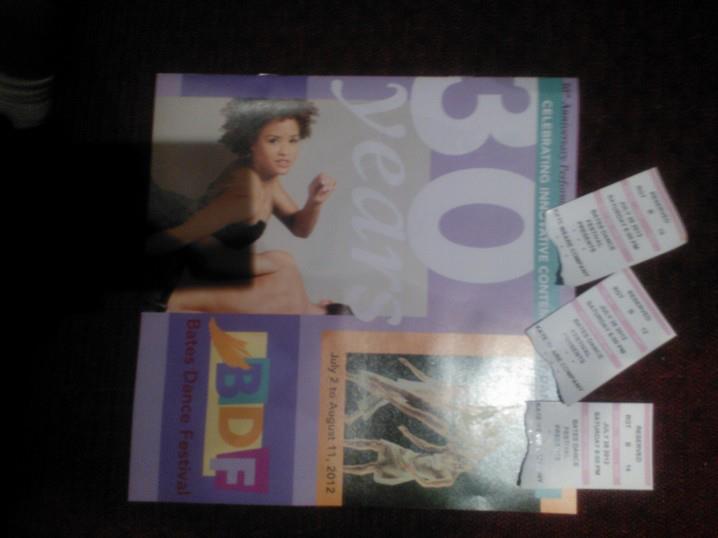
2012 is the 30th Anniversary of a true artist-centered community.  It is also, not coincidentally, the 25th year of tenure for Laura Faure, the guiding force that has made Lewiston, Maine a center of creative gravity in the contemporary dance world internationally.  It was meaningful and logical that Bates was the first stop on the Agileseed Tour, as it was from Laura that I first witnessed the curatorial power that comes from trusting self-organization and allowing the inner structure of a collaboration to emerge and reveal itself rather than be imposed.  We worked together for five years finding resources to realize Festival artists’ next best ideas, working at high velocity in the climate of extreme uncertainty and entrepreneurial fierceness that is nonprofit arts fundraising.

The evening’s performance was the award-winning Kate Weare and Company, featuring Kate’s breakout work Drop Down which received an Audience Choice selection when it premiered at The Joyce Theater in New York in 2006.  The company’s newest work in-progress, Dark Lark, will premiere at Brooklyn Academy of Music.  BDF is one of the co-commissioners.

Dining at the college cafeteria beforehand I ran into Boston-based dance critic Debra Cash, who delivers contextual insight to the works performed on stage in the form of Inside Dance Talks.  Another part of her professional life is dedicated to helping companies prepare for and navigate culture change.  We discussed the upcoming Agile Culture conference.

Meanwhile, my oldest son was rhapsodizing about the Festival as a field of earliest memories from when he was toddler-in-tow.  There were a host of children in-residence with their parents this summer, a good sign that the dance world is finding its way toward healthy work-life balance.

Aimee Petrin, a longtime colleague and Director of Portland Arts, presented Laura with a lovely and well-deserved tribute before curtain.  And Laura pointed out the remarkable press the Festival has gotten this summer – including this coverage on Maine Public Television:

http://video.mpbn.net/video/2255629111

Musings in progress…more to follow…