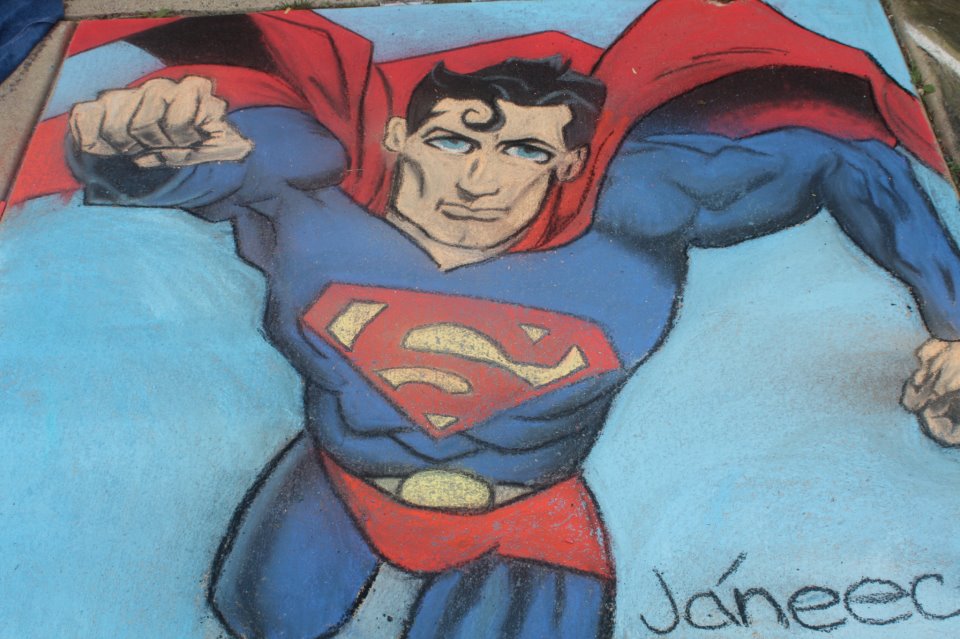
student chalk art2

Chalkville, a city-wide collaboration attempting to break the world record for Largest Chalk Pavement Art in West Haven, Connecticut, this summer may be the first public art project to use Scrum as its project management framework.  Joining a Core Team comprised of Courtney Tracy (Design), Mitchell Gallignano (City Relations), Gwyneth Evans (Registration), Pat Libero (School Relations), and Richard Kasperowski (Agile Coach/Tech) are now two Student-Artist Co-Chairs, Carlos Andino and Mary Antoinette Canieso.

Carlos and Mary Antoinette very kindly took a break from their responsibilities as students during a busy spring of the academic year to answer a few questions.  Valuing people and interactions above tools and processes, the Chalkville team welcomes a chance to get to know more about who they are and introduce them to the broader community.
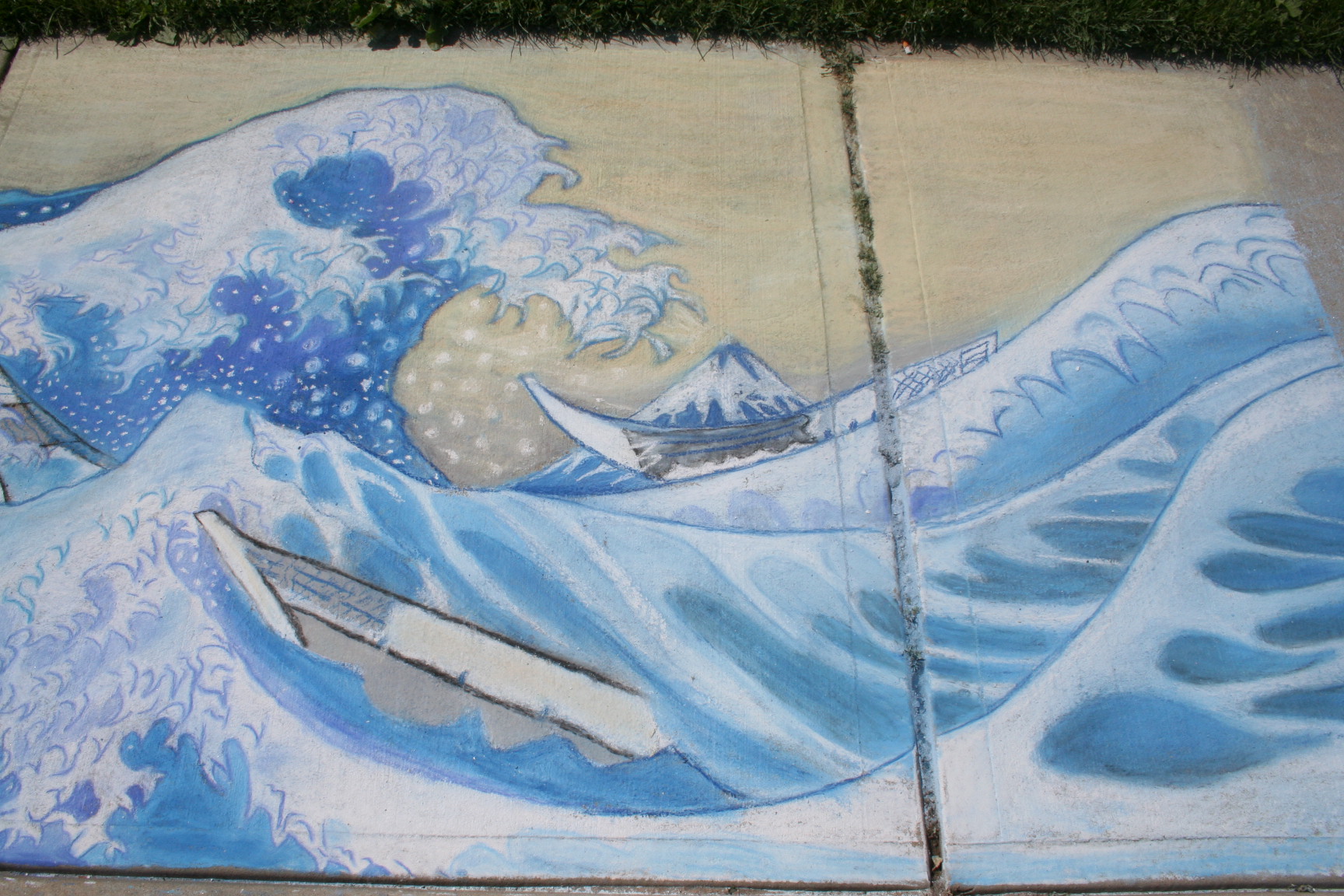
waves


My name is CARLOS ANDINO and I am a junior at West Haven High School. I moved here last year from Puerto Rico. I’ve been a member of the art department ever since I got into the school and have taken classes such as 2D design, Cartooning and Commercial Art.


I’ve always been interested in art. Ever since I can remember, I used to draw on anything and everything that I could (just ask my parents!). I would spend every Saturday morning eating cereal and watching cartoons, and after I’d grab some paper and pencils and draw out my own characters and stories. This has stayed with me throughout my life, and I’m very thankful for that. I love being able to think of interesting and compelling characters and stories, even if I’m the only one that will see them.

Moving here from Puerto Rico has been a big blessing. Back in my old school, the only non-academic classes were P.E. and Computer Science. Even though I am very much into computers, I felt like I was missing out. I would see American high schools on television and movies, where students had a range of classes to choose from, where they could go after school to a club that they enjoyed and wanted to be a part of. I envied that and now I’m very happy that I get to have that life.

The Art Department at West Haven High School has helped me so much with expressing myself through my art. It helped me harness my own style, and not be afraid to express myself, even if thought of as unusual to others. It is very important to me to be proud of my style of art because I hope to be an animator for movies, television shows or commercials. I want to be able to flip through the channels and spot something that I created or helped create rolling on air for the world to see.

In the Chalkville project I hope to contribute my skills as an artist, but also contribute my love for West Haven by making this chalk art the best that it can be. Whether that means being part of the design team or serving people cold water, I want to help any way that I can in this great opportunity that we all have to come together as a community and break the world record for largest chalk art!

IMG_0232 2

NETTIE CANIESO: I’m a senior at West Haven High School and have participated in the Art department for all four years. I have also been a part of the theater program since my sophomore year. I like to write (and sing) my own songs, stories and poetry. 


I’ve always been interested in art. Tooting my own horn, I’d say it was a natural talent. But I learned to hone my skills as student under the three art teachers at the high school and I had the honor of being taught by all three at one point or another. 


As a student, art classes, namely Studio Art Honors, have taught me to think outside the box and never stick to what I am comfortable with. Throughout my years, starting from Studio Art I and taking Studio Art II this year, I have learned the importance of deadlines and being able to produce works of art that I can be happy with while still being able to hand them in on time (being much easier said than done!)  Art is a reflection of what’s important to me as a person. Every work I create (that I am happy with and/or simply complete) is an extension of who I am and what influences me. Art has taught me to give reason to why I do what I do and why I create what I create.


Art will always be a part of my life and I hope to further my art education and eventually become an animator of a cartoon of my own creation. 


I hope that by participating in Chalkville, artists and non-artists alike will get an understanding of what is needed to create a successful work of art.  I hope this hands-on experience shows the community that art is more than just drawing a flower on a piece of paper. It’s a statement louder than words.  We all know a picture says a thousand words.  I hope what we create will leave viewers with at least this one: amazing.
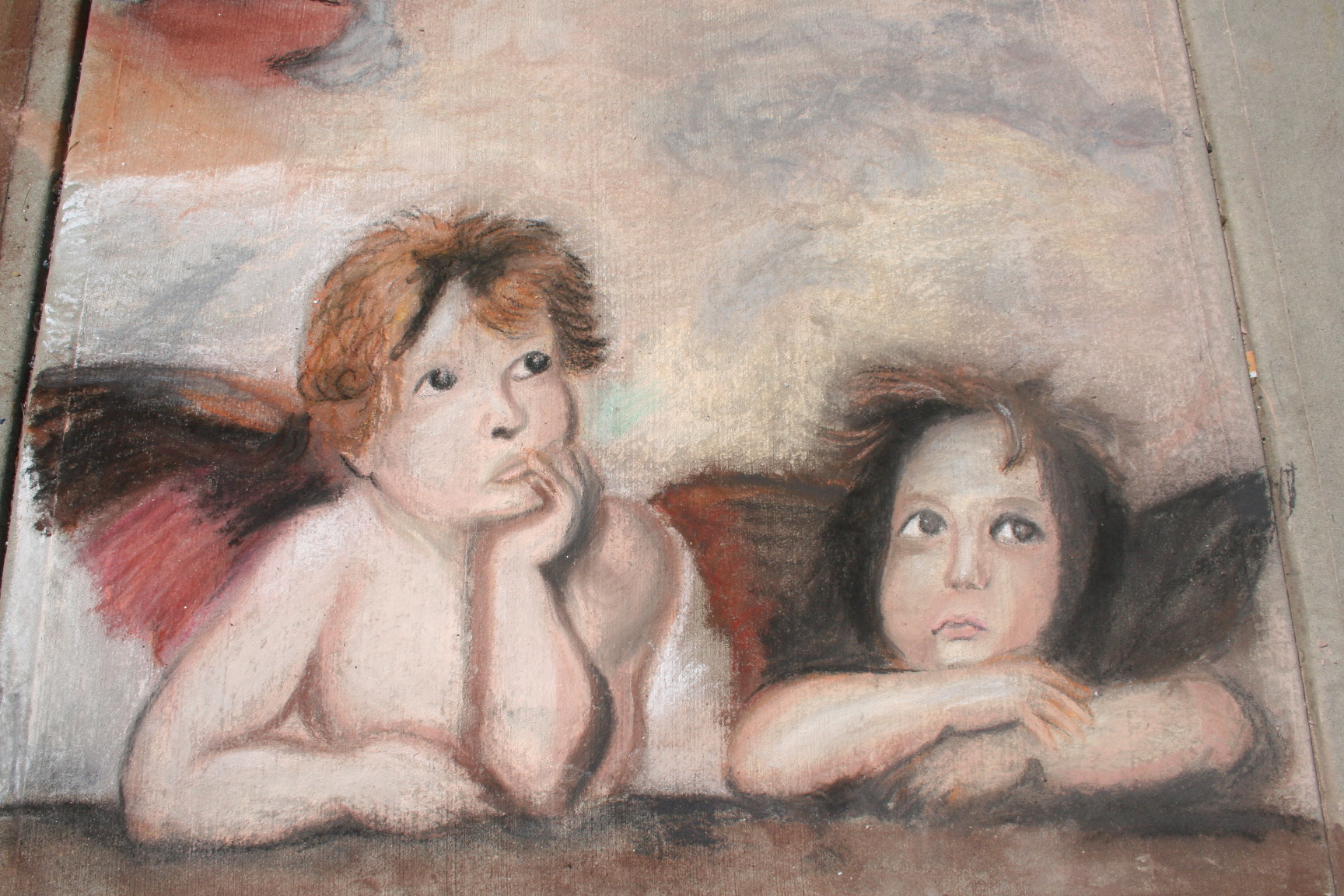
IMG_2579

Heading up the Design Squad, Courtney Tracy, a West Haven resident and alumna of the West Haven High School art department, will meet regularly with the students and other New Haven-area based artists including Giada Crispiels to create a unified image for a site-specific 100,000 square foot drawing.  All are welcome to participate in the world record attempt but must pre-register at www.facebook.com/Chalkville.  Meanwhile, principles of Scrum are keeping the development team on track: timeboxed (2-week) sprints leading up to a fixed release date, urgent and enthusiastic goal-driven communication, frequent inspection and adaptation, clear alignment of purpose in the form of user stories, and a commitment to demonstrate awesome results.
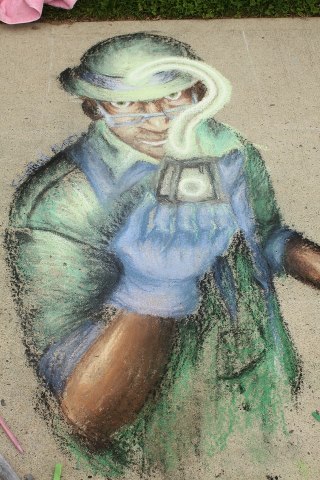
student chalk art1

Chalkville, a large-scale public arts event for civic pride, is funded in part by the Awesome Foundation, Connecticut Chapter.  Donations for chalk and other supplies are fully tax-deductible and may be sent to Chalkville, c/o West Haven Council on the Arts, PO Box 16513 West Haven, CT 06516.  SPECIAL THANKS to Ann Nyberg at WTNH Channel 8 for her recent interview which may be viewed at https://www.youtube.com/watch?v=M1F-k29KYOw

MPT-FBThe Arts and Business Council of Greater Boston is one of the nation’s premiere organizations to formally build an alliance between the arts and start-up worlds.

The schedule for their upcoming MPT workshop series – now in its second year – has just been announced!

The Musician’s Professional Toolbox (MPT) empowers musicians of all genres with the entrepreneurial skills they need to master the business challenges of being an artist. This program takes career musicians (limited to 35 participants) through a series of engaging workshops that further their capacity to think and operate like creative entrepreneurs. Now in its second year, the Musician’s Professional Toolbox program includes 10+ workshops over 9 weeks, presented by 8 outstanding instructors, each a renowned expert in their field. Musicians will leave the program with a business/marketing plan, improved materials, sharp insights into financial management and fundraising, tips and tools of the trade, the support of fellow musicians, and new industry contacts.

Workshops include “Musican as Entrepreneur,”  “Social Media Marketing,” “Grantwriting & Fundraising,” “Successful Contract Negotiation,” and more.  Partial scholarships and payment plans are available.  The contact for this program is D’Lynne Plummer, Director of Professional Development.

More information is available at

www.artsandbusinesscouncil.org

Today for Monday/Collaborate, Artbux interviews Stefanie Lynx Weber, an action-based artist based in Pittsfield, MA who specializes in dance, movement and performance.

hooping_1

Stefanie is presently developing with collaborating artist Monika Pizzichemi, They Dance For Rain which is an on-going Tap Dance (and Hoop Dance) project in Nairobi, Kenya. Exhibitions of photo work from the project (see above) are slated for various Tap Festivals through the US.

We spoke about an article The Washington Post published in August 2012 claiming that dance is the most successful category on Kickstarter.

http://www.washingtonpost.com/lifestyle/style/kickstarter-for-dance-choreographers-could-be-a-gold-mine/2012/08/23/62329816-ea6c-11e1-a80b-9f898562d010_story.html

AB: What experience do you have using Kickstarter for dance?

SLW: I have used Kickstarter for dance projects twice. The first campaign was to complete a 50-minute live performance piece, habitat (de)fragmentation, and be able to pay the performers for the many hours of rehearsal time needed in order to make something ready for a premiere. I also needed some funding for costumes, props, and video editing. I made it a little beyond my goal of about $2000 with much help from my community and many hours plugging away at it. The second time I used Kickstarter was for bringing that same piece eight months later to the Philadelphia Fringe Festival. I needed to cover expenses of travel, hotels, and performance fees. I reached that goal as well.

I also did two more crowd-funding campaigns on another site, Indiegogo, for my dance project They Dance For Rain in Nairobi, Kenya. (For more info on this and other current projects, please visit Stefanie’s blog: http://fertileuniverse.com/about )

AB: What skills do dance artists practice all the time that might make them more successful than others in this space..?

SLW: There are three things that come to mind. One is that dance artists are often not strangers to taking risks. Launching an online campaign to raise money for your vision as an artist is risky business. To those of us used to falling on the floor and getting back up it becomes just another necessary part of the process.

The next thing that comes to mind is that dancers are used to grinding away at something till it flows. Practicing something over and over. Finding what is working and what is not. Crowd-funding can be a grueling and time-consuming process. Again, we are used to trying again and again to get something just right. And that is what you have to do with something like Kickstarter. You have to show up everyday and be willing to try another way to reach that next person.

Most importantly, many dance artists have to be able to really connect and reach others in order to make their work.  If you have other performers in your work, you find out quickly what makes this a different situation from other art forms. Paint does not talk back or have children to feed or need health insurance. Clay is not injured and then not available for 2 weeks or more. I think that dance artists, especially individually-based ones, develop an empathy, understanding and deep view into the human condition make it easier to reach out to others.  This makes it more likely that you would even try something like Kickstarter because you have to really appeal to your audience for their support.

nairobi

You have to create an audience, not only a dance. You have to understand that most people funding you through Kickstarter are going to be people you know, or people they know, and so being connected to them as humans and not just a profile on a screen or a hand with money is invaluable. Most of the people that donated to my campaigns were people who not only believed in my ability to do the work, but worked hard for their living also and saw themselves as becoming a part of the creative process.

Generally speaking, dance artists already have the skills needed to bring people together to make something unique happen.

AB: Does word that dance kicks butt on Kickstarter seem like “news” to you? Why or why not?

SLW: I have not done a lot searching around on Kickstarter so I was not aware of what is working and what is not. I did see a lot of videos, movies, and film-type campaigns being featured often when I was using Kickstarter. I am not surprised at all that individual dance artists (especially), companies and organizations would use a source like this and be successful at it.

Dance is not generally funded broadly and dance artists often use other people to make their art. People need to be paid for their time, skill and energy.  And today’s dance artists are often on the edge, coming up with new perspectives and ways to say something that needs to said. Much of this goes over the heads of larger funding sources or doesn’t fit into their antiquated and limiting funding structures.  Also, dance artists often don’t want or have the ability to wait for long grant cycles, gain “permission” to carry on, or cater their work to a theme or criteria that does not really support their unique or complex process and vision.

Platforms like Kickstarter give more power and visibility to the many kinds of dance-making processes that exist. Dance art is cutting edge because it always involves bodies. Bodies are and always have been radical forms of expression. It’s nice to hear that individual dance artists (especially) are getting what they need from this community-based source because they certainly are not getting it from any corporate, government or nationally structured funding source. Maybe Kickstarter is helping to make the value of this need in our culture more visible.

AB: What message would you like people to take away from the article?

SLW: Sources like Kickstarter (and Indiegogo, etc) are making it possible for dance artists to bypass the worn out roads to funding their valuable and unique visions by providing a concise template and well-organized platform for reaching out and finding financial support. Dance artists therefore have more of an opportunity to successfully blaze their own trails. This is not a walk in the park, it is hard work! Most dance artists who are actively and consistently putting work out are used to that and will step up to the plate.

MORE BIO ON STEFANIE:

Stefanie Weber has worked with many organizations: Jacob’s Pillow Dance Festival, Barrington Stage Company, Berkshire Opera Company, Simon’s Rock, Williams College, Berkshire Community College, Terpsichore Dance Studio, Lenox Community Center, Hudsons’ Operation Unite, East Harlem Union Settlement Association,  Somerville’s ArtBeat, and Cambridge River Festival; as an artist, educator, performer, or choreographer.  Presently she is on faculty with Community Access to the Arts, Berkshire Dance Theater, and Kinesphere Movement Arts Studio.

Stefanie is the founder and artistic director of the Creatures Of Habitat Physical Poetry Public Performance Project and Pittsfield City Hoopla. She is a performer and co-director of the performance ensemble Silver Swimmers (USA) , was in the Commonwealth Tap Collective based in Boston and is a performer with Nutshell Playhouse. A dancer with Caryn Heilman’s LiquidBody Dance for six years, Stefanie immersed herself in the the work of movement pioneer Emily Conrad. She collaborates frequently with various local and international artists, musicians and community development enthusiasts. Her work and development has been supported by the Massachusetts Cultural Council.

Stefanie is a certified Gyrotonic instructor, former Americorps Member, graduate of UMASS Amherst with a degree in Environmental Sciences (focus on toxicology), and has taken artistic residency with The Storefront Artist Project (02-06) and Dana Bixby Architecture (07).  She is a former board member of Topia Arts Center in Adams, MA.

In Spring of 2007, Stefanie was recognized as a “Young Woman Moving the Berkshires Forward” by the Berkshire Eagle newspaper and awarded certificate as an asset to the community by State Senator Benjamin Downing.

Pretend for a moment that work is a creative playground, and we are all on it.

Which of these eight different “Play Personalities” would describe you, your colleagues, managers, clients?

The Joker

Revels in practical jokes, pranks and stunts. Always pulling people’s leg. Hardly ever serious, and/or hard to tell sometimes. Sense of social acceptance dependent upon making others laugh.


The Kinesthete

Someone who needs to move. A high degree of athleticism is built into his/her routine. Enjoys physical antics and displays of derring do.


The Explorer

Always poking around for the next cool thing in the universe. Never bored because there’s so much to do and see. Catch phrase is “I wonder…”


The Competitor

Wants to master any game. A natural maestro, attracted to virtuosity in others. Enjoys going over the rules to improve play, i.e. to WIN.


The Director

Plans and executes scenes and events. Born organizers of other people. Often a charismatic instigator of fun, he/she can hold the dynamic epicenter of a social space.


The Collector

Thirsts for the best and most interesting. Likes arranging and systemizing. Often travels far and wide to satisfy his/her impulses.


The Artist

Finds joy in creating something new. The quintessential “maker.” Sensitive to color, shape and texture. Likes getting things to look and feel just right.


The Storyteller

Always imagining new scenes. Enjoys perfecting his/her reality through playful augmentation. Invites others into situations and events to watch them unfold.

Granted, most of us are a mix of several of these, a Play Personality Parfait, if you will. The dominant stripes are basic archetypes to tap into for greater self-awareness. Learning them can also help identify the most effective ways to interact with others. I am experimenting with the concept of Play Personalities to understand high-level motivations for pulling out people’s greatness.


Inspired by PLAY: How it Shapes the Brain, Opens the Imagination and Invigorates the Soul, by Stuart Brown, MD with Christopher Vaughn, (c) 2009

The image below is included not because anyone paid for it, but because it is directly relevant to the Story.  And, okay, the colors match!

picture Etsy

The other day The New York Times speculated that “hundreds of visitors in expensive suits will rush in a stampede elbowing each other like soccer fans to get in ahead of the competition” in the Netherlands this weekend at the 26th European Art Fair.

Ummm…is that a bad thing?

Business models are always needing to change and adapt.  The business model of the big art auction houses – the main source of Old Master paintings in past decades – has been disrupted.  And so, now in comes the “Art Fair” as the trending replacement model.

It is interesting to note that part of the value proposition of the auction houses was their function as imprimatur.  In most other sectors of the broader culture, the role of “Tastemaker” has waned as the crowd wants direct access to participatory experience, not spectacle.  The traditional art auction is indeed just that: Spectacle with a capital “SP – ECTACLE.”

The very word “fair,” on the other hand, albeit in English, connotes a sense of egalitarian access, a flattening of hierarchies.  The opportunity to leap over the gatekeeper and directly sense what is appealing is, in effect, a powerful chance to curate one’s own gaze.   The opportunity for a more considered negotiation process helps would-be collectors gather intelligence to match up with and learn about their own instincts.  This process of developing embodied knowledge on an individual basis is part and parcel of participatory experience.

Do we want hordes of art collectors honing their own sense of what is worthwhile to look at and purchase, irrespective of those topheavy auction houses that used to control the art market?

Ummm…what do you think?!

Joy Wulke is an environmental artist who founded Projects for a New Millennium, www.projects2K.org.

P2K


The organization is about “creating collaborative events that foster the fusing of art and science as a means of discovery and appreciation of the natural world.”

Wulke’s work is now part of the nightscape of the train station in Stamford, Connecticut.  According to The New York Times, “The new look, different from one second to the next, was achieved for only $155,000 — less than the cost of a paint job.”

The project, funded  with state money awarded on a competitive basis, demonstrates a national trend toward “creative placemaking,” an attempt to make places more vibrant through artist-led projects.  The winning team, led by Norwalk-based painter and sculptor Sandy Garnett, included Jamie Burnett and Steve Hamelin as lighting specialists and advisers.  It was Jamie who coined the term “light wrangler,” which Wulke defines as an artist who responds to the character of light as a partner in creation.

Read more at:

http://www.nytimes.com/2013/03/08/nyregion/at-night-in-stamford-drab-train-station-dazzles.html?_r=0

Worldwide, organizational culture is on the move.

hephtanuxia_by_fraxialmadness3-d5xagrf

New orders are emerging that are better suited to our complex era than those that came to the forefront during the Industrial Revolution.  There is so much on this topic to observe and examine, I have invited colleagues to participate in a trans-Agile metaspace to explore these shifting paradigms.

  • March 22 we will discuss cell-like work structures, including this awesome material from the Betacodex Network:  http://www.betacodex.org/node/1316
  • May 10 the focus will be on sociocracy as a workable and equitable governance structure in practice at Green Haven and Agile Boston.

The group is based out of The Grove in downtown New Haven,  a thriving cowork space and one of four designated Innovation Hubs active in the State of Connecticut (www.grovenewhaven.com).  Inspired by the Stoos Network (www.stoosnetwork.org), our first meeting was held on World Stoos Day, Jan 25, 2012.  It may evolve into a Stoos Satellite or remain a platform that is broader than one particular movement or model.  I am curious to experience how the principle of self-organization animates and propels our discussions.

Meanwhile, here’s to the beauty of spontaneous order!

Do you frequent the Hartford Public Library? If so, share your story TODAY on the Institute of Museum and Library Services’ Facebook page:

https://www.facebook.com/USIMLS

Hartford

The National Medal is the nation’s highest honor conferred on museums and libraries for service to the community. The award as finalist, given to only 33 institutions nationally, celebrates libraries and museums that make a difference for individuals, families and communities.  I have relied on Hartford Public Library’s extensive research section supporting grantseekers, and hope to see the institution shine on this national platform.

Happily for Connecticut, it is not alone!  The Wadsworth Atheneum is also a finalist for the 2013 National Medal.

More information on both institutions can be found at:

www.hplct.org

and

http://www.wadsworthatheneum.org

Susan Hildreth, director of the IMLS,“this year’s finalists exemplify the many wonderful ways museums and libraries can respond to the needs and wants of the communities they serve.”  The IMLS is the primary source of federal support for the nation’s 123,000 libraries and 17,500 museums.  To learn more, please see www.imls.gov .

Kicking off a series of two-part posts by pairing some of my thoughts about working with artists and a client’s notes about our work together. Look for similar posts here at Artbux every other Monday, and please submit your ideas for paired perspectives on collaboration. – Elinor Slomba, CSM

DSCN5822

CONSULTANT’S PERSPECTIVE: In my administrative career – which began in 1994 – I have chosen to work alongside highly creative people. The ongoing effort to connect their great ideas with the resources needed to help actualize them has been the gist of my professional life so far. Mostly I have done this through the written word.

I LOVE artists! I love their vulnerability and sensitivity, and the strength of their convictions. I love how they see things others don’t. And so, in my case, as Kahlil Gibran says eloquently and with more than a grain of truth, “Work is love made visible.”

When you listen for the spaces between words and help someone who’s struggling with the seed of a new idea capture a coherent structure for his/her thoughts, it’s like having a superpower. So many amazing individuals are contributing their time and talent and intelligence – their very substance – to collective vitality right now…and running experiments using models proven viable in specific fields. I am proud to function as “glue” in the arts world and across sectors among them.

Apple

I appreciate the trust it takes to put your ideas into someone else’s hands and ask for help giving them form and expression. Whether or not it’s true what Daniel Pink says about connectors and synthesizers having a special place in civilization these days, and I like to think it is, helping artists be more successful is a permanently cool gig.

Meanwhile, jumps and twirls. Here’s to every day being different, with some more different than others. This hedge against conformity – respect for difference and celebration of meaning among differences whether stark or sublimely subtle – is the main, most substantive thing artists are expert at conjuring in our midst. It is extremely valuable to business. At this point in history, artists are selling what everyone else desperately needs.

DSCN5444

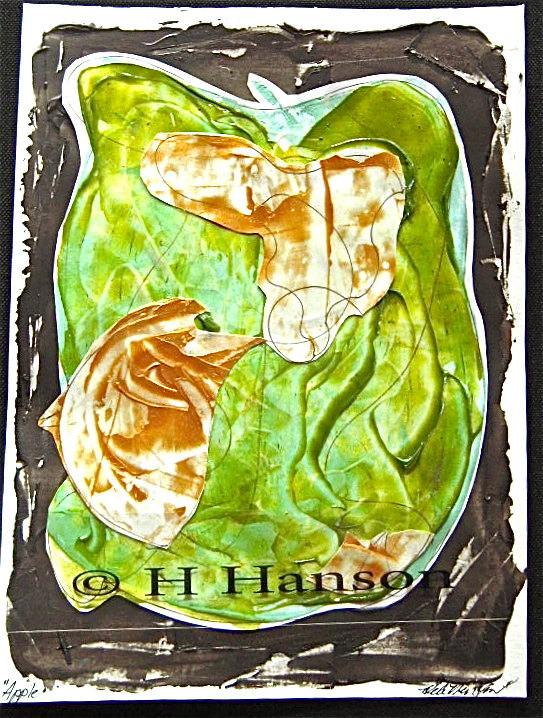
ARTIST’S PERSPECTIVE: Contributed by Helen N. Hanson

Until recently I had never experienced a truly inspirational collaboration. I took the opportunity to collaborate with Elinor Slomba.

Elinor is a storycraft consultant, and she is excellent at her job. Due to illness I have had to transfer from the medium of Acting to the medium of Collage. Same artist, different disciplines, different form of interpretation.

When I first started working with Elinor, I was a bit all over the place, scattered, and not quite sure how to move forward.

We have now worked together for several months and I am quite clear on the direction of my work, the discipline it requires to produce it, and the structuring of my time so that I work as an artist, I tend to my health, I practice meditation, and I practice Collage. Of course all at the same time, there is my family, our home, our pets, our bills, my dear and wonderful friends near and far. LIFE in big capital letters!

Elinor has introduced ideas that would not have occurred to me, she speaks better than I do, she represents me more articulately than I do and she listens well. She has consistently come up with innovative and unusual combinations that prove to be an excellent avenue of getting work out there.

We check in once a week; and in that meeting, we accomplish quite a lot of very fine work. it has been very interesting to listen to her knowledge of social media and her take on what’s a good combination of social media to drive the customer that is already looking for my work. I have learned the importance of navigating and always staying on task on the World Wide Web.

It took a bit of time to find my online limits.  It was a valuable lesson to learn. While I may have a ton of energy, my body, especially now when I am in a healing crisis, may need nothing more then rest and food/ or sleep.

It is been a true pleasure having Elinor as my storycraft consultant.  If you are an entrepreneur, an artist, a dancer, a blogger, a poet…etc., and want to take what you say and perhaps haven’t said clearly and put it out into the worldwide marketplace for thought and/or goods exchange, Elinor Slomba can assist you.

Visionquest

Cross-posted on Helen Hanson’s blog  – nontoxicspiritart.wordpress.com


westhaven


I am pleased to announce the selection of an awesome application for funding by the Connecticut chapter of the Awesome Foundation!

http://www.awesomefoundation.org/en/chapters/connecticut

This spring local artists and cultural organizers will lead citizens of West Haven in an attempt to break a world record for the largest street drawing.  Our implementation team is now forming, and a schedule of public meetings will be announced soon.

At the first meeting we will review the Scrum Guide.  We will seek feedback on using the Scrum framework to establish a flow for the project.  If there are no better ideas, and folks are game, why then we’ll probably just try it.

HAPPY NEW YEAR.  May we all find our hearts in our work in 2013.